Guide · 9 min read · 2,043 words
Decoding Currency Pairs: Going Long and Short in Forex
Understanding how to buy and sell currency pairs is fundamental to forex trading, allowing you to profit from both rising and falling exchange rates.
Key takeaways
- Going long in forex means buying the base currency and selling the quote currency, expecting the base currency to strengthen.
- Going short means selling the base currency and buying the quote currency, expecting the base currency to weaken.
- Currency prices are always quoted in pairs, defining the value of one currency relative to another.
- Leverage amplifies both profits and losses, making risk management, like stop-loss orders, non-negotiable.
- Spreads, the difference between bid and ask prices, are a primary transaction cost and can vary significantly.
- Always trade with a regulated broker; verify their license with authorities like the FCA or ASIC.
The Fundamental Dance: Trading One Currency for Another
Imagine you're in a bustling international airport, exchanging your home currency for the local one. You hand over your euros and receive US dollars. This simple transaction, repeated millions of times a day globally, is the core idea behind forex trading. However, in the trading world, you're not just exchanging; you're making a calculated bet on whether one currency will become stronger or weaker against another. Every forex trade involves two currencies: a base currency and a quote currency.
When you see a pair like EUR/USD, the Euro (EUR) is always the base currency, and the US Dollar (USD) is the quote currency. The price you see, for example, 1.0850, means that 1 Euro is worth 1.0850 US Dollars. The relationship between these two is what you're trading. You're not just buying or selling a currency in isolation; you're always simultaneously buying one and selling the other.
This simultaneous act is what makes forex unique and, for some, a bit confusing at first. It's not like buying a stock, where you simply buy shares of a company. Here, you're constantly evaluating the relative strength of two national economies, two central banks' policies, and two geopolitical markets. It's a continuous, dynamic comparison. Thinking of it as a constant dance, where one partner steps forward and the other steps back, can help keep things clear. Your job as a trader is to anticipate which partner will lead.
Going Long: Betting on the Base Currency's Ascent
When you 'go long' on a currency pair like EUR/USD, you are essentially buying the base currency (EUR) and simultaneously selling the quote currency (USD). Your expectation is that the Euro will strengthen relative to the US Dollar. If the Euro's value rises, meaning it takes more US Dollars to buy one Euro, your trade will become profitable.
Let's say you decide to go long on EUR/USD at a price of 1.0850. This means you are buying Euros at a rate of 1 Euro for 1.0850 US Dollars. If, over time, economic news or market sentiment pushes the price of EUR/USD up to 1.0900, your long position gains value. You could then sell your Euros back for US Dollars at this higher rate, pocketing the difference.
Going long is often associated with a bullish outlook on the base currency. Traders might go long if they believe the European Central Bank (ECB) is about to raise interest rates, or if European economic data, such as GDP growth or employment figures, surprises to the upside. This positive sentiment makes the Euro more attractive, increasing demand for it and pushing its value higher against other currencies. It's like buying shares in a company you believe will perform well; you buy now, hoping to sell at a higher price later.
Example of a 'long' trade on EUR/USD
| Action | Base Currency (EUR) | Quote Currency (USD) | Market Expectation | Outcome at 1.0900 |
|---|---|---|---|---|
| Go Long EUR/USD at 1.0850 | Buy | Sell | EUR strengthens | Profit: (1.0900 - 1.0850) per EUR |
Going Short: Betting on the Base Currency's Decline
'Going short' on a currency pair means betting the base currency will weaken against the quote currency. For example, when shorting EUR/USD, you sell the base currency (EUR) while simultaneously buying the quote currency (USD). Your goal is for the Euro's value to fall, meaning it will take fewer US Dollars to buy one Euro later.
If you initiate a short position on EUR/USD at 1.0850, you effectively borrow Euros (or rather, sell them without owning them) and receive US Dollars. You hope the price drops, perhaps to 1.0800. At this lower price, you can 'buy back' the Euros you initially 'sold' for fewer US Dollars, thus making a profit. The difference between your initial selling price and your eventual buying price represents your gain.
Traders typically go short when they hold a bearish view on the base currency. Weak economic data from the Eurozone, a dovish stance from the ECB, or political instability in Europe could trigger this. For instance, if the US Federal Reserve signals interest rate hikes while the ECB holds steady, the USD might become more appealing, prompting traders to sell EUR/USD. While short-selling can feel counter-intuitive for beginners, it is a powerful tool, allowing profit from market downturns just as much as from upswings.
Example of a 'short' trade on EUR/USD
| Action | Base Currency (EUR) | Quote Currency (USD) | Market Expectation | Outcome at 1.0800 |
|---|---|---|---|---|
| Go Short EUR/USD at 1.0850 | Sell | Buy | EUR weakens | Profit: (1.0850 - 1.0800) per EUR |
The Price You Pay: Understanding Bid, Ask, and Spread
When you look at a currency pair on your trading platform, you'll always see two prices: a 'bid' price and an 'ask' price. The bid price is the price at which you can sell the base currency (or buy the quote currency). The ask price is the price at which you can buy the base currency (or sell the quote currency). Think of it like walking into a currency exchange booth; they have a rate at which they'll buy from you and a slightly higher rate at which they'll sell to you. The difference between these two prices is known as the 'spread'.
The spread is essentially the cost of making a trade, representing the broker's compensation for facilitating your transaction. It's how market makers and brokers earn their money. For major currency pairs like EUR/USD or GBP/USD, spreads can be very tight, sometimes just 0.5 to 1.5 pips during active trading hours. For less frequently traded pairs, known as 'exotic pairs,' spreads can be much wider, reflecting lower liquidity and higher risk for the broker.
Understanding the spread is vital because it immediately puts you at a slight disadvantage when you enter a trade. To make a profit, the market price must move enough in your favor to cover the spread first. A wider spread means a larger hurdle to clear before your position becomes profitable. This is the part most guides skip, but it’s a direct cost you pay on every single trade. Always check a broker's typical spreads, especially during different market conditions, before committing your capital.
Trading with an unregulated broker is akin to handing your cash to a stranger on a dark alley; you have no guarantees and very little recourse if things go wrong.
The Double-Edged Sword: Leverage in Forex Trading
One of the most attractive, yet dangerous, features of forex trading is leverage. Leverage allows you to control a large position in the market with a relatively small amount of capital, known as margin. For example, with 1:30 leverage, a $1,000 deposit could allow you to control a $30,000 position in the market. This magnification can significantly boost your potential profits.
However, leverage is a double-edged sword. Just as it amplifies potential gains, it also amplifies potential losses. If a leveraged trade moves against you, your small initial capital can be wiped out very quickly. This is why regulators in many jurisdictions have imposed limits. For instance, for retail clients under the ESMA intervention in Europe, leverage for major currency pairs is capped at 1:30, while for other pairs and assets, it can be as low as 1:2. The FCA, for example, details these limits clearly on their website.
Don't be swayed by brokers offering extremely high leverage like 1:500 or 1:1000 without understanding the full implications. While tempting, such high leverage is often available only through less regulated entities or to professional clients who meet specific criteria. For beginners, starting with lower leverage or even trading without it (if available) is a much safer approach until you've gained considerable experience and a consistent trading strategy. Your broker will liquidate your position if your losses exceed your margin, a process called a margin call, leaving you with nothing.
Calculating Your Profit and Loss: Pip by Pip
Understanding how to calculate your profit or loss (P&L) is fundamental. In forex, price movements are measured in 'pips' (percentage in point). For most currency pairs, a pip is the fourth decimal place (e.g., 0.0001). For JPY pairs, it's the second decimal place (e.g., 0.01). The value of a pip depends on your trade size.
Let's use a standard lot size, which is 100,000 units of the base currency. For EUR/USD, if you trade one standard lot, a 1-pip movement is typically worth $10. So, if you go long on EUR/USD at 1.0850 and close the trade at 1.0900, that's a 50-pip gain. Your gross profit would be 50 pips * $10/pip = $500. From this, you'd subtract the spread you paid to enter and exit the trade.
For a mini lot (10,000 units), 1 pip is typically worth $1, and for a micro lot (1,000 units), it's $0.10. Always know your pip value before entering a trade. This allows you to accurately assess your risk and potential reward, helping you set appropriate stop-loss and take-profit levels. Running these calculations in a demo account or on paper until it becomes second nature is a smart move.
Typical Pip Values by Lot Size
| Lot Size | Base Units | Approx. Pip Value (USD for XXX/USD) |
|---|---|---|
| Standard Lot | 100,000 | $10.00 |
| Mini Lot | 10,000 | $1.00 |
| Micro Lot | 1,000 | $0.10 |
Forces Driving Exchange Rates: What Moves the Market?
Currency prices don't just fluctuate randomly; they react to a complex interplay of factors. Economic indicators are major drivers. Think about employment reports, inflation data, or GDP figures. A stronger-than-expected jobs report from the US, for instance, might signal a healthy economy, potentially leading the Federal Reserve to consider raising interest rates. This makes the US Dollar more attractive, and traders might go long on USD pairs or short on pairs where USD is the quote currency (e.g., short EUR/USD).
Interest rate differentials are another powerful force. If the central bank of one country raises its rates while another holds theirs steady, investors will move their money to the country offering higher returns, increasing demand for that currency. Geopolitical events also play a significant role. Political instability, trade wars, or even major elections can create uncertainty, prompting investors to seek 'safe-haven' currencies like the US Dollar, Japanese Yen, or Swiss Franc, causing them to strengthen.
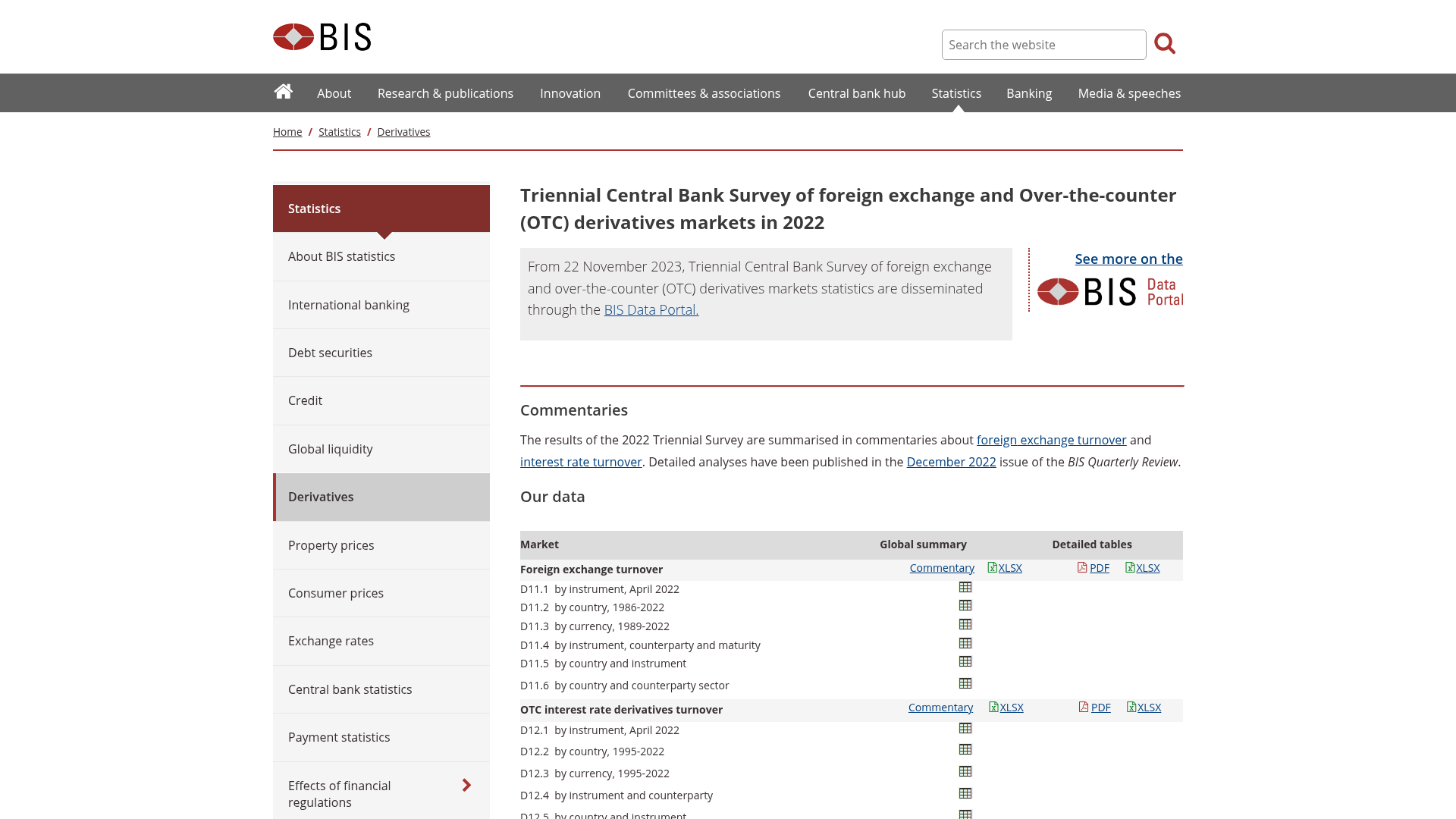
While this may sound overwhelming, you don't need to be an economist to trade forex. However, having a general understanding of these forces helps you make informed decisions rather than simply guessing. Staying updated with economic calendars and major news headlines is a core part of a forex trader's routine. The BIS Triennial Central Bank Survey of FX turnover provides fascinating insights into the sheer scale and composition of these global movements.
The Smart Choice: Why Regulation isn't Optional
When you're entrusting your hard-earned money to a broker, their regulatory status should be your absolute top priority. Trading forex with an unregulated broker is akin to handing your cash to a stranger on a dark alley; you have no guarantees and very little recourse if things go wrong. Reputable brokers are licensed and monitored by financial authorities, providing a layer of protection for your funds and ensuring fair trading practices.
Look for brokers regulated by top-tier authorities such as the Financial Conduct Authority (FCA) in the UK, the Australian Securities and Investments Commission (ASIC), the Cyprus Securities and Exchange Commission (CySEC), or the Commodity Futures Trading Commission (CFTC) / National Futures Association (NFA) in the US. These regulators enforce strict rules on how brokers operate, including capital requirements, client fund segregation, and complaints procedures. For example, Pepperstone is regulated by the FCA and ASIC, offering peace of mind to its clients.
Before opening an account, always verify a broker's license directly on the regulator's website. Don't just trust what a broker claims on their own site; take a few minutes to use the official register, like the FCA's Financial Services Register. If a broker's claimed license number doesn't check out, or if they claim to be regulated by an unknown entity, walk away. There are plenty of well-regulated options, so there's no need to take unnecessary risks with your capital. Unregulated firms often operate from offshore locations, making legal action incredibly difficult if you become a victim of misconduct.
Start Small, Learn Steadily: The Path to Confidence
Trading, whether going long or short, requires practice and discipline. It's not a get-rich-quick scheme, and anyone who tells you otherwise is selling something. For beginners, starting with a demo account is the smartest first step. A demo account allows you to trade with virtual money in a real-time market environment, giving you invaluable experience without risking any of your own capital. Treat your demo account seriously, as if it were real money, to build good habits.
Once you transition to a live account, consider starting with very small trade sizes, like micro lots. This significantly reduces your financial exposure while you gain confidence and refine your strategy. Many brokers, including XM and IC Markets, offer accounts where you can trade micro lots. This approach allows you to experience the emotional ups and downs of live trading with minimal impact on your bank balance.
Remember, consistency and risk management are far more important than trying to hit a home run on every trade. Focus on preserving your capital and slowly growing your account. Learn from your mistakes, review your trades, and continuously educate yourself. The markets are always teaching, and a patient, steady approach will serve you far better than chasing quick profits. Your trading journey is a marathon, not a sprint.
Read the primary source
Check it at the regulator, not at us
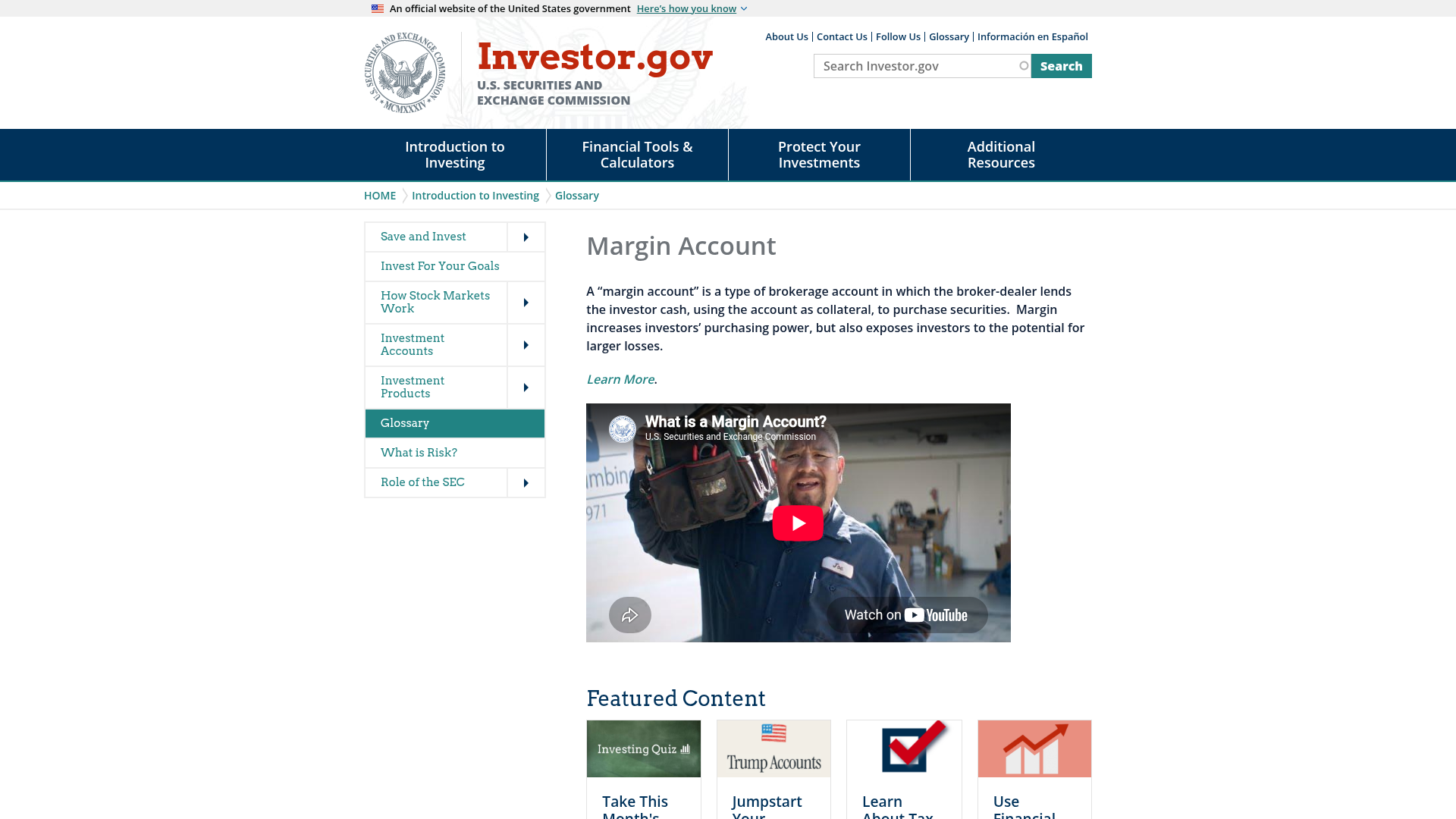
Screenshots of the official pages behind the rules in this guide. Open them yourself — the regulator’s own words always beat a summary of them.
Frequently asked
Sources
Where this came from
- ESMA — CFD leverage limits for retail clientsesma.europa.eu
- FCA — Contract for difference productsfca.org.uk
- BIS Triennial Central Bank Survey of FX turnoverbis.org
- CFTC — Forex trading basics for consumerscftc.gov
- Financial Conduct Authority — Financial Services Registerregister.fca.org.uk
Written by Sofia Reyes
Risk & Psychology Tutor. We write structured, plain-English forex education for people learning from scratch. Understanding first, always — and never financial advice. The course itself lives in the curriculum.
Keep learning
Where this guide leads next
The guides closest to this one, in the order they build on it. Each is a full read on its own, and none of them assume you finished this page.
- Base Currency and Quote Currency: Understanding EUR/USD From Left to RightDemystify currency pairs like EUR/USD by learning how to read exchange rates, identify base and quote currencies, and grasp the…
- Demystifying Trading: What Your Loved Ones Really Need to Know About Your Market PursuitsExplaining market trading to worried family means cutting through jargon and myths, focusing on the mechanics, risks, and careful…
- Your First Twenty Words: A Forex Vocabulary Self-TestBefore you place a single trade, mastering these foundational forex terms is crucial for clear thinking and confident…
- Majors, Minors, and Crosses: Making Sense of Currency Pair LabelsUnderstanding the different categories of currency pairs is essential for every forex trader, directly impacting risk, liquidity…
- The Instant After You Click: Inside Your Trade's JourneyThat split-second between hitting 'buy' and seeing your position open is a flurry of complex processes. Understand what truly…