Guide · 12 min read · 2,243 words
Running a Weekly Risk Budget: Your Path to Consistent Trading
Stop guessing your risk on every trade and adopt a smarter, weekly approach to protect capital and smooth your trading equity curve.

Key takeaways
- A weekly risk budget shifts focus from individual trade outcomes to overall capital preservation.
- Setting a fixed percentage (e.g., 1-2%) of your account as a weekly maximum loss helps manage drawdowns.
- Divide your weekly budget by your planned number of trades to determine an appropriate per-trade risk amount.
- Adhering strictly to your weekly loss limit by stopping trading once it's hit is fundamental discipline.
- This approach fosters psychological resilience, reducing emotional trading and overtrading tendencies.
- Leverage amplifies risk, so ensure your weekly budget accounts for potential magnified losses on highly leveraged positions.
The Endless Cycle of Guessing Trade-by-Trade Risk
It’s a Monday morning, and you’ve just placed a trade. You set a stop-loss, perhaps risking 1% of your account. By Tuesday, that trade hits its stop. You place another, hoping to recoup the loss, risking another 1%. This continues, and by Friday, you might find yourself down 5% or more, feeling emotionally drained and wondering where you went wrong. This common scenario highlights a fundamental flaw in how many retail traders approach risk: they treat each trade as an isolated event.
Thinking about risk one trade at a time, without a larger framework, often leads to inconsistent performance and emotional decisions. Each loss feels like a direct hit to your capital, prompting impulsive actions to 'get it back'. This reactive trading style can quickly erode your account and your confidence. Without a broader perspective, it's easy to fall into the trap of overtrading, increasing position sizes after losses, or chasing volatile markets, all of which are recipes for disaster.
Imagine trying to manage your household finances by only looking at the cost of each individual grocery item without considering your total weekly food budget. You'd quickly find yourself overspending. Trading capital works much the same way. You need a bigger picture, a financial fence around your weekly activity, to maintain control. That fence is your weekly risk budget.
Why a Weekly Budget Transforms Your Trading View
Shifting from a per-trade risk mindset to a weekly risk budget is like moving from a microscopic view of a single leaf to a macroscopic view of the entire forest. Instead of obsessing over whether a particular trade's stop-loss is 0.5% or 1%, you first decide on the absolute maximum amount of capital you are willing to lose in an entire week. This simple change fundamentally alters your relationship with risk and losses.
A weekly budget provides a crucial psychological buffer. If you hit your weekly loss limit on a Tuesday, you stop trading for the rest of the week. This isn't punishment; it's protection. It prevents you from digging a deeper hole and forces you to step away, regroup, and come back with a clear mind the following week. It institutionalizes discipline, which is often the missing ingredient for many traders.
This approach also encourages higher quality trade selection. Because each individual trade now consumes a portion of your fixed weekly risk allowance, you naturally become more discerning. You’re less likely to jump into mediocre setups when you know that a single bad decision could mean sitting on the sidelines for days. The weekly budget puts the onus on patience and precision, rather than volume and haste.
Defining Your Weekly Risk Allowance
So, how do you set this weekly budget? It’s not a one-size-fits-all answer, but a good starting point is to allocate a small percentage of your total trading capital. Many experienced traders suggest a weekly risk of 1% to 2% of your account balance. For a $10,000 account, this would mean a maximum weekly loss of $100 to $200.
This percentage should be conservative, especially if you're newer to trading or experiencing a period of high market volatility. Remember, the goal is capital preservation and consistent growth, not aggressive, high-stakes gambling. Even professional fund managers operate with strict drawdown limits that often translate to very low weekly or monthly risk tolerances relative to their entire portfolio. Your personal risk tolerance, your trading strategy's win rate, and your average winning and losing trade sizes should all factor into this decision.
If you find 1-2% too restrictive, perhaps your trading frequency or position sizing needs adjustment. The weekly budget isn't meant to stifle your trading, but to ensure it's sustainable. Start small, prove consistency, and then you can consider gradual adjustments. The key is to pick a number you can comfortably live with losing in a single week without feeling undue emotional pressure.
Translating Weekly Risk into Per-Trade Exposures
Once you have your weekly risk budget, the next step is to figure out what that means for each individual trade you take. This is where the budget truly starts to dictate your actions. It's not about pre-determining exactly how many trades you'll make, but rather understanding the impact each potential loss has on your weekly limit. Let’s say your weekly budget is $100.
If you plan to take five trades in a week, you might allocate $20 (or 0.2% of your $10,000 account) as the maximum loss for each trade. If you only plan for two trades, each could risk $50 (or 0.5%). The point is that the weekly limit forces you to think about the total number of potential losing trades you can sustain before you hit your ceiling and must stop. This is a crucial shift in perspective, moving from 'how much can I risk on this trade?' to 'how many trades can I risk until my weekly budget is depleted?'.
This method inherently links your trading frequency and risk management. If your strategy typically generates only two high-conviction trades a week, then a higher per-trade risk (within the weekly budget) is appropriate. If you are a scalper taking 20 trades, your per-trade risk will necessarily be much smaller. The table below illustrates how a fixed weekly budget can be distributed across different numbers of planned trades, ensuring you never exceed your overall limit.
Translating a Weekly Risk Budget to Individual Trade Risk
| Account Size ($) | Weekly Risk % | Weekly Budget ($) | Planned Trades | Max Risk per Trade ($) | Max Risk per Trade (% of Account) |
|---|---|---|---|---|---|
| 10,000 | 1% | 100 | 5 | 20 | 0.2% |
| 10,000 | 1% | 100 | 10 | 10 | 0.1% |
| 10,000 | 2% | 200 | 5 | 40 | 0.4% |
| 25,000 | 1.5% | 375 | 8 | 46.88 | 0.19% |
| 50,000 | 1% | 500 | 4 | 125 | 0.25% |
The weekly budget provides a crucial psychological buffer, preventing you from digging a deeper hole and forcing you to step away, regroup, and come back with a clear mind.
Understanding Wins and Losses Within Your Weekly Cap
The true test of a weekly risk budget comes when you're in the thick of a trading week. What happens if you hit your weekly loss limit early, say by Wednesday? The rule is simple, direct, and non-negotiable: you stop trading for the remainder of the week. This is not about letting fear dictate your actions, but about adhering to a pre-defined, logical boundary that protects your capital. It removes the emotional decision-making that often follows a series of losses, preventing you from trying to 'make back' what you've lost, which is a common path to even larger drawdowns.
What if you have a fantastic start to the week and are significantly profitable? Does your per-trade risk change? No. Your maximum allowed loss for the week is still your initial budget. While your account balance might have increased, you should not increase your per-trade risk in that same week. The weekly budget acts as a consistent anchor. If you've made $200 profit on a $100 weekly risk budget, you've essentially 'de-risked' the week, but you shouldn't suddenly become more aggressive. The idea is to maintain steady risk exposure. Any adjustments to your budget should happen only after a full week, or even a full month, of review, not mid-week based on performance.
This unwavering adherence, regardless of short-term outcomes, is the discipline that pays off. It creates consistency and emotional stability, allowing you to focus on executing your strategy rather than reacting to every P&L fluctuation. In practice, resisting the urge to 'make it back' after hitting your weekly limit is one of the hardest disciplines to master, but it is unequivocally the most rewarding in the long run.
The Mental Advantage: Trading with Confidence
One of the most understated benefits of a weekly risk budget is the profound impact it has on your psychology. Trading can be an incredibly stressful endeavor, filled with uncertainty and the constant potential for loss. When you manage risk trade-by-trade, every single stop-loss feels like a personal failure, leading to anxiety, frustration, and often, revenge trading.
With a weekly budget, you reframe losses. A single loss, or even a few losses, doesn't feel catastrophic because you know there's a defined ceiling for your weekly drawdown. This overarching limit provides a sense of control and calm. It allows you to approach each trade with less emotional baggage, knowing that the worst-case scenario for the week is already contained. This psychological cushion is incredibly powerful.
This is the part most guides skip: The true benefit is mental resilience. Knowing that your downside is capped frees up mental energy. You can focus more on strategy execution, market analysis, and identifying high-probability setups, rather than being constantly preoccupied with the fear of a big loss. This reduced stress leads to clearer thinking, better decision-making, and ultimately, more consistent performance. It builds confidence not just in your strategy, but in your ability to manage the emotional rollercoaster of the markets.
Leverage, Margin, and Your Weekly Risk Budget
Leverage is a double-edged sword in trading; it amplifies both potential gains and losses. Understanding its role is critical when implementing a weekly risk budget. Many brokers offer significant leverage, such as Pepperstone, which allows clients to trade global markets with tight spreads and platforms like MT4, MT5, and TradingView, but the maximum leverage available is capped by regulatory bodies. For instance, in regions under ESMA intervention, like the EU, retail clients are typically capped at 1:30 leverage for major currency pairs. This means for every €1 in your trading account, you can control a position worth up to €30.
While leverage doesn't directly increase your risk per trade if you consistently use stop-losses to define your maximum dollar loss, it does mean that smaller price movements can liquidate your position faster if you don't use a stop-loss or if your stop-loss is very wide. More importantly, higher leverage means you tie up less margin for a given position size, freeing up capital that you might be tempted to over-commit if you aren't disciplined with your risk budget. For example, a standard lot (100,000 units) of EUR/USD with 1:30 leverage requires roughly €3,333 in margin, whereas with 1:500 leverage, it would only require €200. This lower margin requirement doesn't mean less risk if your stop-loss is still set to lose, say, $100; it just means you have more 'buying power' to potentially open more trades or larger trades that could quickly blow through your weekly budget if not managed.
Therefore, even with high leverage offered by brokers like XM or IC Markets (which are regulated by ASIC and CySEC, among others), your weekly risk budget should be the primary governor of your exposure. Don't let the availability of high leverage tempt you into taking on more dollar risk per trade than your budget allows. Your weekly budget is your ultimate safeguard against the seductive power of leverage. Always calculate your position size based on your defined dollar risk per trade, then consider the margin required, not the other way around.
Reviewing and Adjusting Your Risk Budget
A weekly risk budget isn't a rigid, set-it-and-forget-it rule. It's a dynamic tool that should evolve with your trading journey. Just as your trading strategy might adapt to changing market conditions, your risk budget should be reviewed periodically. How often? A good practice is to review it at the end of each month, or perhaps quarterly. Daily or weekly reviews are usually too frequent and can lead to impulsive changes based on short-term performance.
When should you consider adjusting your budget? Primarily, if your account balance has changed significantly. If you’ve had a period of sustained profitability, you might slightly increase your weekly dollar risk (while keeping the percentage the same) to reflect your larger capital. If you’ve experienced a significant drawdown, it’s prudent to reduce your weekly risk (again, maintaining the percentage) to protect the remaining capital and allow for recovery. Another reason for adjustment could be a fundamental shift in market volatility. In exceptionally volatile periods, you might temporarily reduce your percentage risk to account for wider stop-losses or more aggressive price swings.
The review process isn't just about numbers; it’s also an opportunity for self-assessment. Are you adhering to your budget? Are you stopping when you hit your limit? Are your chosen per-trade risk levels appropriate for your strategy’s win rate? This reflective practice is crucial for continuous improvement. Remember, the goal is long-term consistency, and a flexible yet disciplined approach to your weekly risk budget is a cornerstone of achieving that.
Putting the Weekly Budget into Action
Implementing a weekly risk budget requires more than just a calculation; it demands consistent discipline. The first step is to clearly define your budget – whether it's 1% or 2% of your account – and write it down where you can see it. This concrete statement helps to internalize the rule. Next, before placing any trade, always calculate the exact dollar risk for that specific setup based on your stop-loss level, and ensure it fits within your weekly allowance. If a trade’s ideal stop-loss would exceed your allowed per-trade risk, you have two choices: either pass on the trade, or reduce your position size to bring the dollar risk in line with your budget.
Using a trading journal becomes even more critical with a weekly budget. Track your running weekly P&L (profit and loss) diligently. This isn't just about recording trades; it's about monitoring your consumption of the weekly risk allowance. Many trading platforms like MT4 and MT5 don't natively track weekly risk, so a simple spreadsheet or a dedicated journaling tool can be invaluable. This clear, real-time tracking prevents you from accidentally exceeding your limit. For example, if your weekly budget is $100 and you've already accumulated $80 in losses from previous trades, you know you only have $20 left for any new trades this week. If your next potential trade risks $30, you simply cannot take it.
Adopting this framework means committing to the discipline it requires. It will feel restrictive at first, especially if you're used to a more ad-hoc approach. But the freedom it grants – the freedom from emotional trading, from chasing losses, and from significant drawdowns – far outweighs any initial perceived limitations. It fosters a professional approach to trading, transforming chaotic decision-making into structured, intentional risk management. Start small, stay consistent, and watch your trading confidence and equity curve steadily improve.
Tracking Weekly Risk Budget Consumption
| Account Balance ($) | Weekly Risk Budget ($) | Initial Trade 1 Risk ($) | Trade 1 P&L ($) | Remaining Weekly Risk ($) | Initial Trade 2 Risk ($) | Trade 2 P&L ($) | Remaining Weekly Risk ($) |
|---|---|---|---|---|---|---|---|
| 10,000 | 100 | 20 | -20 | 80 | 20 | +30 | 80 |
| 10,000 | 100 | 25 | -25 | 75 | 25 | -25 | 50 |
| 10,000 | 100 | 30 | -30 | 70 | 30 | -30 | 40 |
| 10,000 | 100 | 40 | -40 | 60 | 40 | -40 | 20 |
Read the primary source
Check it at the regulator, not at us
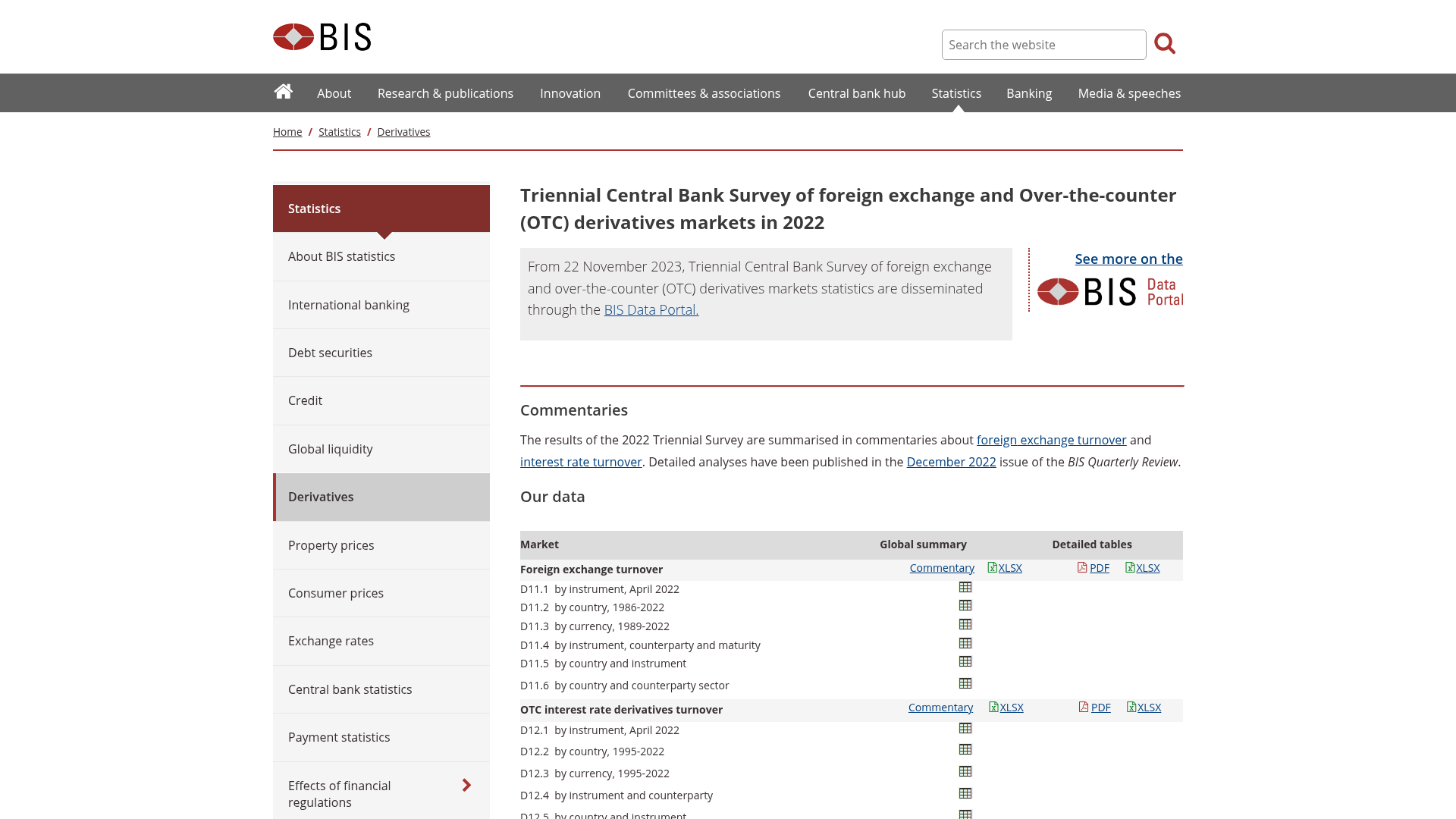
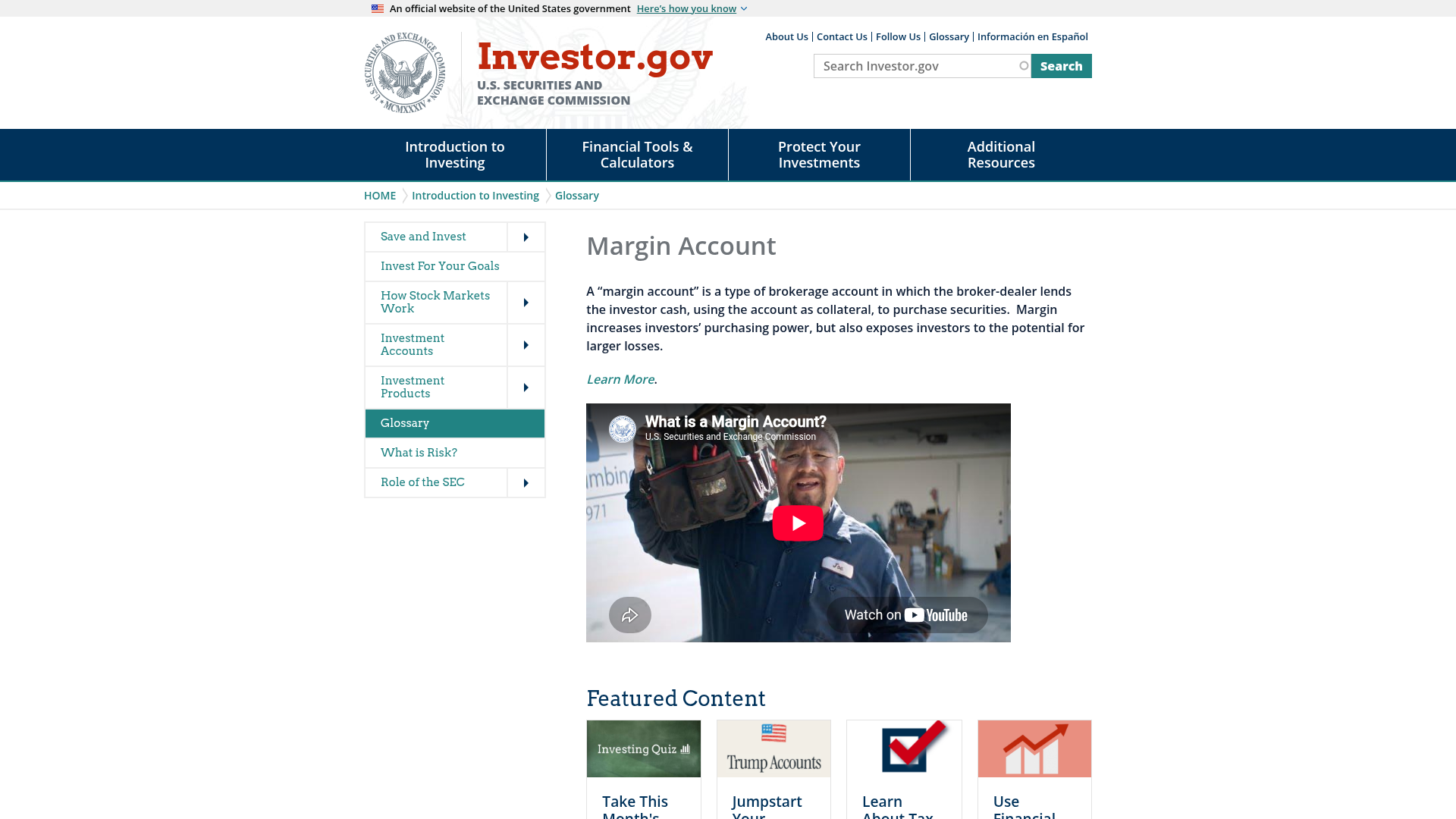
Screenshots of the official pages behind the rules in this guide. Open them yourself — the regulator’s own words always beat a summary of them.
Frequently asked
Sources
Where this came from
Written by Sofia Reyes
Risk & Psychology Tutor. We write structured, plain-English forex education for people learning from scratch. Understanding first, always — and never financial advice. The course itself lives in the curriculum.
Keep learning
Where this guide leads next
The guides closest to this one, in the order they build on it. Each is a full read on its own, and none of them assume you finished this page.
- Designing a Daily Loss Limit You'll Actually Honor at 3 PMDiscover how to construct a daily trading loss limit that protects your capital and psychology, designed to hold firm even during…
- Mastering Total Open Risk: Your Essential Guide to Capping Exposure Across All Trading PositionsUnderstanding and actively limiting your total capital at risk across all open trades simultaneously is the bedrock of lasting…
- Overtrading: Three Warning Signs and Your Weekly Counter-MeasureDiscover the insidious patterns of overtrading, understand its true costs, and learn a simple, weekly audit method to regain…
- Wider Stop, Smaller Size: The Essential Trade-Off for TradersDiscover how adjusting your stop loss distance directly impacts your position size, ensuring consistent risk management in every…
- The Unforgiving Math: Why a 50% Loss Demands a 100% Gain to RecoverLosing half your trading capital doesn't mean you just need another 50% gain; the path to recovery is mathematically steeper and…