Guide · 15 min read · 2,550 words
Strategy on Ice: Distinguishing a Cold Trading System from a Broken One
Learn to tell if your trading strategy is just experiencing a temporary drawdown or has fundamentally stopped working, safeguarding your capital and confidence.

Key takeaways
- A 'cold' strategy temporarily underperforms due to market noise or short-term anomalies, while a 'broken' one has lost its edge due to fundamental market shifts.
- Focus on core statistical integrity, like average win size and strike rate, rather than just overall win percentage.
- Thoroughly analyse trade-level data during drawdowns to pinpoint specific points of failure or merely unusual variance.
- Regularly review your strategy's underlying assumptions against current market structure and regulatory changes.
- Emotional attachment and confirmation bias are significant hurdles to objectively evaluating a strategy's health.
- Set clear, predefined criteria for both pausing a cold strategy and abandoning a broken one before live trading begins.
The Silence of Your Account: When Trades Stop Working
Imagine your trading account balance, typically a vibrant green, has turned a concerning shade of red. You’ve followed your rules perfectly, executed your entries and exits with precision, but the market simply isn't responding the way it used to. Week after week, the small, consistent gains you once celebrated have vanished, replaced by a series of frustrating losses or tiny, meaningless wins. This isn't just one bad day; it feels like a prolonged, relentless grind. Your confidence takes a hit, and that nagging question starts to form: Is my strategy just having a rough patch, or has something fundamentally changed?
This experience is incredibly common among traders, from beginners to seasoned professionals. The market is a dynamic beast, constantly shifting, and what worked brilliantly last month might falter today. The challenge isn't merely experiencing a drawdown – every strategy has them. The real difficulty lies in distinguishing between a temporary slump, where your strategy is merely 'cold,' and a deeper, more ominous issue where your strategy is truly 'broken.' Making the wrong call here can be devastating. Holding onto a broken strategy will bleed your account dry, while abandoning a merely cold one means missing out on its eventual recovery. We need a clear, objective framework to make this critical distinction.
Defining 'Cold' Versus 'Broken' in Practice
Let's put some clear boundaries around these concepts. A cold strategy is one that is temporarily underperforming its historical averages but still retains its fundamental edge. Think of it like a star athlete who's in a slump. They haven't forgotten how to play; they're just not performing at their peak for a short period. The underlying conditions that gave the strategy an edge are still present, but perhaps market noise is higher, volatility is lower than expected, or there's a temporary bias that doesn't align with the strategy's usual patterns. These periods are often cyclical and will eventually revert to the mean.
A broken strategy, on the other hand, is one whose underlying edge has been permanently eroded or significantly diminished. The market conditions that allowed it to profit have changed in a structural way, making the strategy's core logic obsolete or unprofitable. This is like that star athlete sustaining a career-ending injury. The game itself has changed, or their ability to play it effectively is gone. This could be due to new regulations, increased competition, shifts in market microstructure, or even the strategy becoming too widely known and arbitraged away. Continuing to trade a broken strategy is akin to trying to catch a falling knife without a plan; it's a guaranteed way to lose capital.
Key Performance Metrics Beyond Simple Win Rate
Many traders fixate solely on the win rate – the percentage of trades that close profitably. While important, it's a shallow metric if viewed in isolation. A strategy with a 90% win rate might still be a net loser if its 10% of losing trades are catastrophic. To truly assess your strategy's health, you need to look at a broader set of metrics that provide a more nuanced picture of its profitability and risk profile. These include:
- Average Win Size vs. Average Loss Size (Profit Factor): A healthy strategy should have average wins significantly larger than average losses, or a high enough win rate to compensate for smaller wins and larger losses. This tells you if you're making enough on your winners to cover your losers.
- Expectancy: This is the average profit or loss you can expect per trade. It's calculated as: (Win Rate * Average Win Size) - (Loss Rate * Average Loss Size). A positive expectancy is non-negotiable for a profitable strategy.
- Maximum Drawdown: The largest peak-to-trough decline in your account balance. This indicates the worst-case scenario you've faced and helps you understand your strategy's inherent risk. If current drawdowns are consistently exceeding historical max drawdowns, it's a red flag.
- Consecutive Losses: How many losing trades can you expect in a row? A string of losses within historical norms might just be a cold streak, but an unprecedented run of losses suggests deeper issues.
By tracking these metrics diligently, you gain a statistical baseline to compare current performance against. Any significant, sustained deviation from these baselines should prompt a deeper investigation, not just a shrug and a hope for the best.
The Market's Mood: External Conditions and Strategy Performance
Sometimes, your strategy isn't broken; the market just isn't offering the opportunities it needs to thrive. Different strategies perform best under different market conditions. A trend-following strategy will struggle in a consolidating, choppy market. A range-bound strategy will get whipsawed in a strong trend. Interest rate decisions, major geopolitical events, or even seasonal patterns can drastically alter market behavior.
Consider the impact of central bank policies. When major central banks like the European Central Bank or the Federal Reserve change their monetary policy stance, it can dramatically affect currency pair volatility and trending behavior. For example, during periods of quantitative easing, markets might exhibit lower volatility, which could hurt strategies that rely on significant price swings. A sudden spike in inflation, such as those that prompted aggressive rate hikes in 2022, can introduce unexpected volatility and stronger trends, potentially overwhelming strategies built for calmer environments. The key is to understand what kind of market 'weather' your strategy is designed for and honestly assess if that weather is currently present. If your strategy thrives on volatility but the market is becalmed, it might just be cold, waiting for conditions to change. You must not confuse the market's mood with your strategy's intrinsic health.
Analysing Trade-Level Data During a Slump
When facing a period of underperformance, resist the urge to jump to conclusions. Instead, meticulously review every single trade that contributed to the drawdown. This is where the real detective work happens. Don't just look at whether a trade was a win or loss; dig into the details:
- Entry Quality: Were your entries still aligned with your rules? Were you getting in at optimal points, or was there slippage or hesitation? If you find consistent issues with entries, it might be a problem with your execution, not the strategy itself.
- Exit Management: Were your stop losses hit too quickly due to increased volatility? Were your profit targets too ambitious or too conservative for current market conditions? Sometimes, a simple adjustment to stop-loss or take-profit placement can make a big difference.
- Market Context: What was the broader market doing around the time of each trade? Was there a major news event? Was the instrument hitting a key support/resistance level? Correlate your losing trades with specific market events or conditions.
- Time of Day/Week: Are your losses concentrated during specific sessions or days? Perhaps your strategy works best during the London session but is struggling during the Asian session.
This granular analysis can reveal patterns you wouldn't see in aggregated performance metrics. You might discover that the losses aren't evenly distributed but are concentrated in a specific type of setup or during particular market hours, suggesting a tweak rather than an overhaul. Remember, what we're looking for here is consistency in execution. If your execution is perfect, and the strategy is still failing, then it points to a deeper issue. This is the part most guides skip, focusing instead on high-level concepts, but the devil is truly in the details of your actual trades.
Example Trade Log Review for Identifying Performance Issues
| Trade ID | Entry Price | Exit Price | P/L ($) | Duration | Market Context (News/Vol) | Rule Deviation? |
|---|---|---|---|---|---|---|
| #12345 | 1.1050 | 1.1020 | -30 | 1h 15m | Low Volatility | No |
| #12346 | 1.2805 | 1.2830 | +25 | 30m | GBP PMI Release | No |
| #12347 | 0.9870 | 0.9855 | -15 | 2h 00m | Sideways market | No |
| #12348 | 1.3520 | 1.3490 | -30 | 45m | USD Interest Rate Talk | No |
| #12349 | 0.7200 | 0.7215 | +15 | 1h 10m | AUD CPI Data | Yes (Early Exit) |
Holding onto a truly broken strategy will bleed your account dry, while abandoning a merely cold one means missing out on its eventual recovery.
The Strategy's Core Logic: Has Its Premise Expired?
Every trading strategy is built upon a premise – an underlying belief about how the market behaves. For example, a momentum strategy assumes that assets moving strongly in one direction tend to continue doing so for a period. A mean-reversion strategy assumes that prices tend to return to an average after extreme deviations. A fundamental strategy assumes that price eventually reflects intrinsic value.
When your strategy moves from cold to broken, it's often because this core premise no longer holds true, or its efficacy has been severely diminished. Ask yourself: Has the market structure changed? Have new participants entered, altering price action? Are regulatory shifts impacting how instruments are traded? For instance, ESMA's intervention in 2018 capped leverage for retail clients on CFDs at 1:30 for major currency pairs and even lower for other assets. This kind of regulatory change can drastically alter the risk-reward profile for strategies heavily reliant on high leverage, potentially rendering them broken for retail traders, even if the core market premise still holds for institutional players with greater capital.
If the fundamental reason your strategy worked is gone, then no amount of tweaking or patience will bring it back. You are then trying to fit a square peg into a round hole, and it will only lead to mounting losses.
Robustness Testing: Backtesting and Forward Testing for Answers
Before you even consider live trading, thorough testing is essential. This involves both backtesting and forward testing. Backtesting means applying your strategy rules to historical data to see how it would have performed. Modern platforms like MetaTrader 4/5, TradingView, or even specialized software offer sophisticated backtesting capabilities. When your strategy hits a cold patch, re-backtesting it over different periods, especially recent ones, can offer insights. Does it still show a positive expectancy on recent historical data?
Forward testing (also known as paper trading or demo trading) involves applying your strategy to live market conditions using virtual money. This bridges the gap between historical data and real-time execution. If your live strategy is struggling, running it concurrently on a demo account can isolate execution issues from strategy flaws. If your live account is losing but your demo account, with identical settings and conditions, is profitable, then the problem likely lies in your execution, broker, or psychology, not the strategy itself. If both are faltering, the strategy is likely the culprit.
Keep a meticulous record of all your backtest and forward test results. This data becomes your anchor when the storms of market uncertainty hit. Without this data, you're flying blind, relying purely on gut feeling, which is a dangerous approach in trading.
Regulatory and Structural Shifts: When the Rules Change
The financial markets are not static. Regulators constantly adapt rules, and market structure evolves. These changes can have a profound impact on strategies, especially those dealing with derivatives like Contracts for Difference (CFDs) or highly leveraged products. For example, the FCA in the UK, alongside ESMA in the EU, has imposed strict limits on CFD products for retail clients, including mandatory negative balance protection and leverage caps. These changes, designed to protect consumers, can fundamentally alter the profitability for certain strategies.
Consider the change in reporting requirements or liquidity provision. A strategy that relied on specific order book dynamics might become less effective if major liquidity providers pull back or change their algorithms. Even seemingly small changes, like shifts in exchange operating hours or changes to tick sizes, can affect high-frequency strategies. You need to stay informed about the broader market environment. Regularly check regulatory websites like the FCA's or ASIC's official announcements. If a new rule directly impacts the instruments or methods your strategy uses, it's a strong indicator that your strategy might be broken, or at the very least, needs significant adaptation. Ignoring these external shifts is like trying to drive a car with a square wheel after the roads have been paved for round ones.
This also applies to competition. If your strategy's edge comes from exploiting a specific inefficiency, and that inefficiency becomes widely known and exploited by more and more traders, the edge will inevitably diminish. It's a race, and the market often finds equilibrium quickly.
Examples of Regulatory and Structural Shifts Affecting Trading Strategies
| Regulatory Body | Intervention Date | Impacted Instrument/Market | Key Change | Strategy Impact (Example) |
|---|---|---|---|---|
| ESMA | 2018-08-01 | CFDs for Retail | Leverage capped at 1:30 for majors | High-leverage scalping strategies less viable |
| FCA | 2019-01-01 | CFDs for Retail | Mandatory negative balance protection | Reduced catastrophic risk, but also reduced broker incentive for aggressive trading |
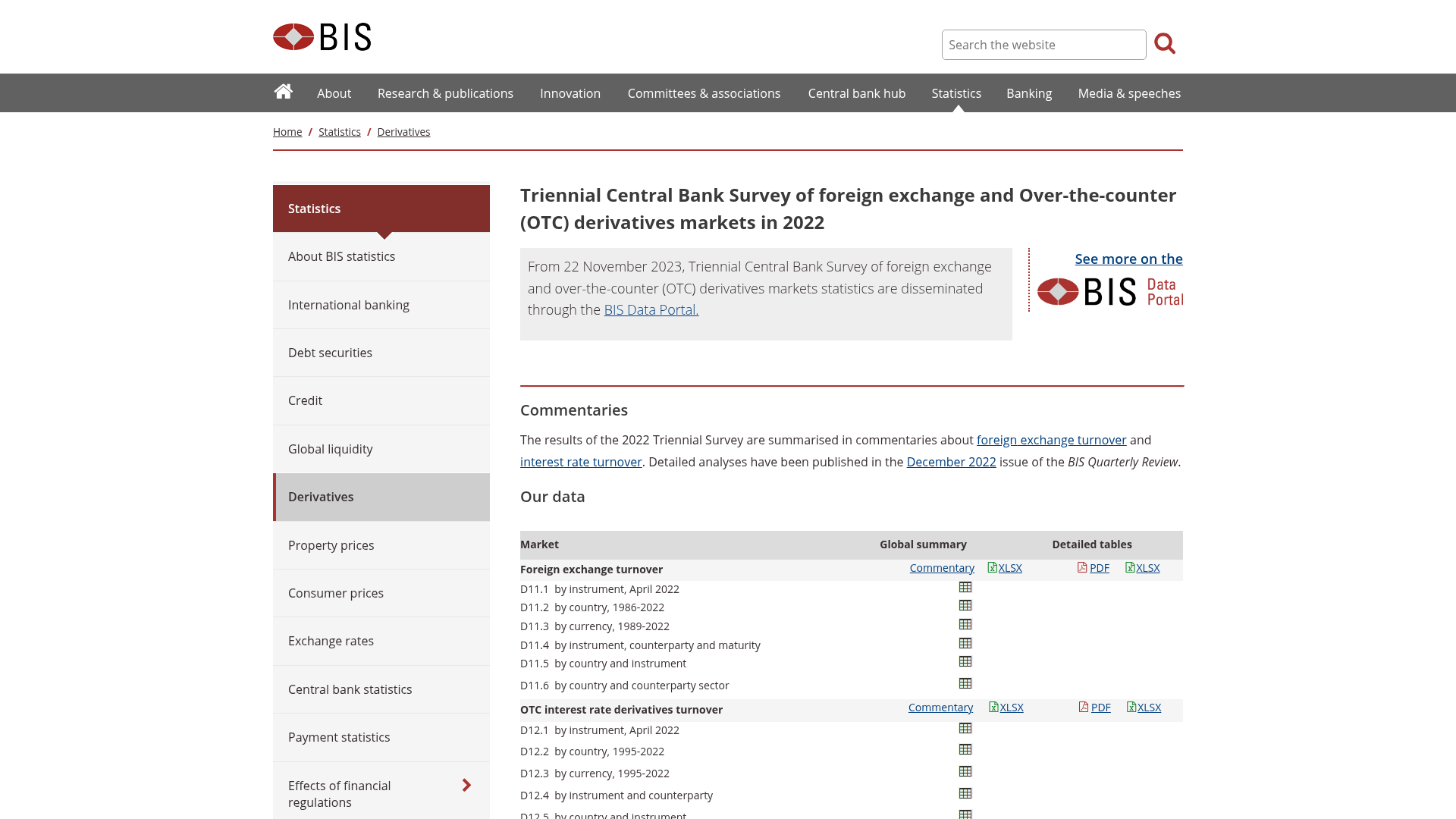
| BIS | Ongoing | FX Market Structure | Increased electronic trading, algorithmic dominance | Manual order-flow reading strategies face more competition |
| CFTC | Ongoing | US Forex Brokers | Strict NFA oversight, capital requirements | Limited broker options for US traders, affecting spread competition |
The Cost of Denial: Fixing Versus Abandoning
This is where human psychology often gets in the way. It's tough to admit that something you've invested time, effort, and capital into might be fundamentally flawed. Many traders will try to 'fix' a broken strategy by making endless tweaks, adding more indicators, or changing parameters based on recent performance. This is often a losing game, turning a once-clear strategy into a convoluted mess.
Fixing a cold strategy involves minor adjustments – perhaps tightening risk management, adjusting trade size, or simply pausing trading until market conditions align. Abandoning a broken strategy, however, means accepting that its time has passed. This requires a strong dose of objectivity and emotional detachment. The sunk cost fallacy is a powerful force here; the more you've put into a strategy, the harder it is to let go. But continuing to trade a broken strategy is arguably worse than admitting defeat and starting fresh. You're not just losing money; you're losing valuable time and emotional energy that could be spent developing a new, viable approach. A broken strategy is a capital drain, while a cold one is merely waiting for the right conditions.
Trader Psychology: Overcoming Bias in Strategy Evaluation
Our brains are wired for patterns, and sometimes, for self-deception. When evaluating a struggling strategy, several cognitive biases can lead us astray:
- Confirmation Bias: We tend to seek out information that confirms our existing beliefs. If we believe our strategy is good, we might selectively remember its past successes and downplay recent failures.
- Anchoring Bias: We might 'anchor' our expectations to the strategy's peak performance, believing it will inevitably return to those levels, even if the market has changed.
- Loss Aversion: The pain of a loss feels stronger than the pleasure of an equivalent gain. This can make us cling to a losing strategy, hoping to recover our losses, rather than cutting bait.
To counteract these biases, adopt a systematic, data-driven approach. Establish clear criteria for when a strategy moves from 'cold' to 'broken' before you start trading it. For instance, define a maximum acceptable drawdown percentage, or a specific number of consecutive losing trades that would trigger a full review. If the strategy hits those thresholds, then you must perform a deep dive, removing emotion from the equation. This pre-defined framework acts as your objective guide, preventing emotional decision-making from dictating whether you hold or fold your strategy.
Moving Forward: The Actionable Steps
If your strategy is struggling, here's a step-by-step approach to address the challenge:
- Stop Live Trading: Immediately. Shift to a demo account or simply paper trade for a defined period (e.g., two weeks). This stops the bleeding while you investigate.
- Review the Data: Go through your trade log with a fine-tooth comb, as detailed earlier. Look for patterns, inconsistencies, and deviations from your rules. Pay attention to profit factor, expectancy, and consecutive losses.
- Assess Market Conditions: What is the current market environment? Is it trending, ranging, volatile, or quiet? How does this compare to the conditions your strategy is designed for? Has anything significant changed in regulations or market structure?
- Re-backtest and Forward Test: Run your strategy through recent historical data and on a demo account. If the backtest shows continued profitability but your live account doesn't, investigate your execution, broker, or psychological factors.
- Identify Potential Tweaks: If the strategy is 'cold,' identify specific, minimal adjustments. This might involve wider stops, smaller position sizes, or only trading during specific market hours. Implement these changes one at a time on a demo account.
- Set a 'Broken' Threshold: Define exactly what would constitute a broken strategy for you. This could be a specific sustained negative expectancy, a drawdown that exceeds historical maximums by a certain percentage, or a confirmed invalidation of its core premise.
Trading successfully means more than just having a good strategy; it means being a diligent analyst and a disciplined decision-maker. Learn to objectively evaluate your performance and the market's behavior, and don't be afraid to adapt or move on when the evidence demands it. Your trading capital and your peace of mind depend on it.
Read the primary source
Check it at the regulator, not at us
Screenshots of the official pages behind the rules in this guide. Open them yourself — the regulator’s own words always beat a summary of them.
Frequently asked
Sources
Where this came from
Written by Daniel Okafor
Curriculum Author. We write structured, plain-English forex education for people learning from scratch. Understanding first, always — and never financial advice. The course itself lives in the curriculum.
Keep learning
Where this guide leads next
The guides closest to this one, in the order they build on it. Each is a full read on its own, and none of them assume you finished this page.
- Trading Through the Storm: Handling Losing Streaks Without Trashing Your Entire SystemLosing streaks can rattle even seasoned traders. Learn how to systematically diagnose issues and make precise adjustments, not…
- Your Win Rate and the Losing Streaks You Should ExpectUnderstand the cold math behind unavoidable losing streaks in trading, calculate your expected drawdowns, and build the resilience…
- Reading Your Equity Curve: Spotting Early DriftA trader's equity curve is more than just a performance graph; it's a diagnostic tool that reveals subtle shifts in your trading…
- Recency Bias: When Your Last Trade Dictates Your Next OneDiscover how the deceptive influence of recent trading outcomes can silently sabotage your strategy and lead to costly, irrational…
- Does Your Trading Setup Only Shine at Certain Hours? Here's How to KnowMany traders find their strategies perform brilliantly sometimes, but fall flat at others; the market's rhythm, not your skill…