Guide · 12 min read · 2,601 words
Crafting a News Filter Rule: Shielding Your Trades from Market Shocks
Proactive news filtering is not optional; it's a critical component of any effective trading plan, designed to protect your capital from unforeseen market volatility.

Key takeaways
- Unscheduled news events, not just scheduled releases, often cause the most damaging market volatility, demanding proactive risk management.
- A news filter rule defines specific, pre-planned conditions under which you will avoid entering new trades or manage existing ones to mitigate risk.
- Effective news filters consider the type of event, its potential impact, the specific currency pairs affected, and a precise time window.
- Broker execution policies, including potential slippage and requotes during high-impact news, are crucial factors to consider when refining your filter.
- Your news filter is a living document; it requires regular testing, refinement, and adaptation based on changing market dynamics and personal trading experience.
The Unexpected Jolt: Why Your Plan Needs a News Shield
Imagine this: you've spent hours analyzing charts, identifying a perfect entry point for a EUR/USD long position. Everything aligns – technical indicators, price action, even the time of day. You enter the trade, feeling confident, with your stop-loss precisely placed. Then, without warning, a headline flashes across your screen about unexpected geopolitical tension in Europe, or a major central bank governor makes an unscripted, market-moving statement. Suddenly, the market goes wild. Your carefully placed stop-loss might get 'slipped' – meaning it executes at a far worse price than intended – or the market moves so fast your position is wiped out before you can react. This isn't just bad luck; it's a lack of preparation for the unpredictable.
Most trading guides focus heavily on technical analysis, chart patterns, and fundamental data releases you can mark on a calendar. And those are incredibly important! But this is the part most guides skip: what to do when the market throws a curveball, when a true 'black swan' event or even just an unscheduled, impactful announcement hits. Without a clear plan, these moments can unravel days or even weeks of disciplined trading.
Think of your trading plan as a detailed road map for a journey. You know the destination, the routes to take, and even the speed limits. But what if there's a sudden, unexpected detour, or heavy fog rolls in? You need a contingency plan, a set of rules for when the unexpected happens, to keep you safe and on track. That's exactly what a news filter rule provides for your trading: a shield against the sudden storms that can appear on the market horizon.
The Two Faces of News: Scheduled and Unscheduled Impact
Not all news is created equal, especially in its impact on market volatility. We can broadly categorize market-moving information into two types: scheduled and unscheduled. Understanding the difference is your first step toward building an effective news filter.
Scheduled news consists of economic data releases, central bank meetings, corporate earnings reports, and political elections that are known well in advance. These events appear on economic calendars provided by financial news outlets and brokers, often with an estimated impact level. Think of the US Non-Farm Payrolls (NFP) report, Consumer Price Index (CPI) releases, or central bank interest rate decisions from the likes of the Federal Reserve or the European Central Bank. While the outcome of these events can certainly surprise the market, their timing is predictable. This predictability allows traders and institutions to position themselves beforehand, meaning some of the potential volatility might already be 'priced in' to the market.
Unscheduled news, on the other hand, is the true wildcard. This category includes unexpected geopolitical developments (like sudden conflicts or diplomatic crises), natural disasters, major company scandals, or unannounced policy shifts. These events hit the market without warning, often causing immediate, dramatic, and difficult-to-predict price movements. Because there's no pre-positioning, the market's reaction can be far more chaotic, leading to wider spreads, significant slippage, and rapid shifts in market sentiment. These are the events that frequently trigger the most painful losses for unprepared traders, as they disrupt established trends and technical setups without a moment's notice.
What Exactly is a News Filter Rule?
So, what are we talking about when we say 'news filter rule'? Simply put, it's a pre-defined set of conditions that, when met, tell you to either not enter new trades, or to actively manage (e.g., close, hedge, or tighten stops on) existing trades. It's a critical component of your risk management strategy, designed to keep your capital safe when market conditions become too chaotic for your normal trading approach.
The core purpose of a news filter is not to predict the outcome of a news event, nor is it to try and profit from the immediate, wild swings. Instead, its goal is defensive: to avoid periods of extreme market volatility, low liquidity, and unpredictable price action where your usual technical or fundamental edge is severely diminished or even completely absent. When a major news event hits, the market often behaves erratically, moving purely on sentiment and sudden order flow rather than logical analysis.
Think of it like a pilot's pre-flight checklist. Before taking off, a pilot reviews numerous conditions: weather, fuel levels, engine diagnostics. If any critical condition isn't met – say, there's a severe thunderstorm on the flight path – the pilot doesn't try to 'trade' through it. They ground the plane. Your news filter rule is your 'severe thunderstorm' check. If the market weather is too rough, you stand aside. It's a disciplined, logical decision made before the heat of the moment, when emotions might otherwise cloud your judgment.
Components of a News Filter
Building an effective news filter means being specific about what you're filtering for. A vague notion of 'avoiding news' simply isn't enough. Your rule needs clear, actionable components. Let's break down the key elements you should consider:
First, identify the event type. Is it a central bank interest rate decision, a Non-Farm Payrolls release, a presidential election, or something else entirely? Each type of event carries a different potential for market disruption. Next, consider the impact level. Many economic calendars categorize events as high, medium, or low impact (often color-coded, like red for high impact). While this is a helpful guide, your personal assessment of impact for the instruments you trade might differ.
Crucially, specify the affected instruments. A US jobs report will primarily impact USD pairs (like EUR/USD, GBP/USD, USD/JPY), but it might also have secondary effects on commodities priced in USD or global indices. An Australian interest rate decision, however, will be most relevant for AUD pairs. Don't cast too wide a net, but don't be too narrow either. Finally, define a precise time window around the event. This means setting clear boundaries: how many minutes before the event will you stop entering new trades, and for how long after the event will you remain on the sidelines? For high-impact scheduled news, a common practice is to allocate 30 minutes before and 60 minutes after the release. For unscheduled news, the window starts immediately upon the news breaking and lasts until market volatility subsides or a clearer direction emerges. Many traders obsess over technical indicators, but a sudden 150-pip spike on breaking news will flatten any indicator signal; it's the raw price action that dictates immediate risk.
Here’s an example table illustrating how you might categorize and set time windows for different types of news:
Example News Events and Recommended Trading Buffer Times
| Event Category | Impact Level | Typical Affected Pairs | Pre-Event Buffer (minutes) | Post-Event Buffer (minutes) |
|---|---|---|---|---|
| Central Bank Rate Decision (e.g., ECB, Fed) | High | EUR, USD pairs, major indices | 30 | 60 |
| Major Employment Report (e.g., NFP) | High | USD pairs, major indices | 30 | 60 |
| Consumer Price Index (CPI) | High | Primary currency of release, correlated pairs | 15 | 45 |
| Geopolitical Event (e.g., unexpected conflict) | Unscheduled/High | Safe-haven currencies (JPY, CHF), affected regional assets | Immediate | Until volatility subsides (hours) |
| Unscheduled Political Speech/Announcement | Medium-High | Affected currency/region pairs | Immediate | 30-90 (depending on content) |
A news filter isn't about avoiding news; it's about making a deliberate, pre-planned choice to stand aside during conditions where your trading edge is compromised.
Crafting Your Rule: A Step-by-Step Approach
Now that we understand the components, let's put them together. Crafting your news filter rule is a methodical process that integrates directly with your existing trading strategy. It’s not a one-size-fits-all solution; it needs to be tailored to your style of trading.
Step 1: Understand your core strategy's vulnerability. Does your strategy thrive on calm, predictable price action (like scalping or range trading), or can it handle significant volatility (like strong trend following)? If your strategy relies on tight stop-losses and precise entries, it's far more susceptible to news-driven spikes and gaps. For example, a scalper aiming for 5-10 pips profit with a 10-pip stop-loss would be devastated by a 50-pip news spike, while a swing trader with a 200-pip stop might ride it out.
Step 2: List the common high-impact events for your chosen instruments. If you trade EUR/USD and GBP/JPY, you'll need to focus on news related to the Eurozone, UK, US, and Japan. Utilize reliable economic calendars (e.g., Forex Factory, Investing.com) and filter them to show only high-impact events. Pay attention to the 'actual vs. forecast' figures, as the deviation is what often causes the biggest moves.
Step 3: Define your "no-trade" zones clearly. This is the core of your filter. For instance, your rule might state: "I will not open any new trades on any major currency pair 30 minutes before and 60 minutes after any central bank interest rate decision for USD, EUR, GBP, or JPY." Be specific about the assets and the timeframes. Beyond scheduled events, consider how you will react to unscheduled news. Set up real-time news alerts from reputable providers. Your rule might include: "Upon receiving notification of an unscheduled high-impact geopolitical event, I will immediately pause all new trade entries for at least 2 hours, or until market conditions stabilize."
Step 4: Decide on existing trade management. What do you do if you're already in a trade when a news event hits your filter? Options include: tightening stop-losses (though this increases the risk of being stopped out prematurely due to volatility), closing a portion of your position, closing the entire position, or, for advanced traders, hedging the position. Your decision here should align with your overall risk tolerance and trade management style.
The Broker's Role: Execution During Volatility
Even with a meticulously crafted news filter, your broker's execution policies during volatile market conditions play a critical role in your actual trade outcomes. It's not enough to simply avoid trading; you need to understand how your broker handles the extreme price action that often accompanies major news. This is where the rubber meets the road, and the difference between a good broker and a poor one becomes painfully clear.
The primary concern is slippage. Slippage occurs when your order is executed at a price different from the price you requested. During high-impact news, liquidity can dry up, and prices can move so rapidly that by the time your order reaches the market, the requested price is no longer available. This is particularly relevant for stop-loss orders, which are designed to limit losses. If your stop-loss is set at 1.1000, but the market gaps down to 1.0950 in a flash, your stop might execute at 1.0950, causing a larger loss than anticipated.
Some brokers offer market execution, where your order is filled at the best available price, whatever that may be. Others might offer instant execution with requotes, meaning if the price moves before your order is filled, you'll be offered a new price (a requote) that you can either accept or reject. While requotes protect you from negative slippage, they can also mean you miss out on a desired entry or exit. During high-volatility events, requotes can become frequent, making it difficult to execute trades at all.
It's imperative to read your broker's terms and conditions regarding execution in volatile markets. Look for explicit statements about stop-loss execution, guaranteed stops (which typically come with a wider spread or fee), and policies on widening spreads during news. Reputable brokers are transparent about these conditions. Their regulatory oversight also offers a layer of protection; for example, brokers regulated by the UK's FCA or Australia's ASIC generally operate under stricter consumer protection guidelines compared to those regulated in less stringent offshore jurisdictions. Knowing your broker's headquarters and primary regulators gives insight into the operational environment they adhere to.
Here’s a comparison of a few prominent brokers and their regulatory environment, which often influences their approach to client protection and execution during news:
Selected Broker Regulatory Information Relevant to Execution Standards
| Broker | Headquarters | Primary Regulators (Examples) | Retail Client Protection Focus |
|---|---|---|---|
| Pepperstone | Melbourne, Australia | FCA (UK), ASIC (AU), CySEC (CY) | High transparency, strict capital requirements |
| IC Markets | Sydney, Australia | ASIC (AU), CySEC (CY) | Competitive execution, often preferred by algo traders |
| OANDA | New York, USA | FCA (UK), CFTC/NFA (US), ASIC (AU) | Strong regulatory compliance, emphasis on data transparency |
| FxPro | London, UK | FCA (UK), CySEC (CY) | Focus on execution quality, anti-slippage technology claims |
Integrating Your Filter into Your Trading Plan
A news filter rule is only as effective as its integration into your overall trading plan. It shouldn't be an afterthought or something you 'remember' to check; it needs to be a fundamental, unskippable step in your pre-trade routine. Think of it as the very first hurdle your potential trade must clear.
Practically, this means positioning the news filter check at the beginning of your decision-making process. Before you even look at a chart for an entry signal, before you calculate your position size, ask yourself: "Is there a high-impact news event within my defined 'no-trade' window for the currency pair or asset I'm considering?" If the answer is yes, the process stops there. No trade. You simply wait until the window has passed and market conditions have normalized. If the answer is no, then you proceed with your usual analysis and entry criteria.
This disciplined approach removes the temptation to 'just quickly grab a few pips' around a news release, a mindset that has cost countless traders significant capital. Your news filter rule acts as a gatekeeper, preventing you from entering potentially disastrous situations. It's like wearing a seatbelt every time you get in the car. You hope you never need it, but it's always there, providing a crucial layer of safety when the unexpected happens.
Imagine your trading plan as a series of boxes you must tick before executing a trade. The news filter box should be the very first one, ensuring foundational safety before tactical considerations.
Testing and Adapting Your News Filter
Just like any other aspect of your trading plan, your news filter rule isn't static. It's a dynamic tool that needs regular testing, review, and adaptation. Markets evolve, the impact of certain news events can shift over time, and your own trading strategy might change, necessitating adjustments to your filter.
One effective way to test your filter is through backtesting. This involves going through historical charts and economic calendars. Identify past high-impact news events and see how your chosen currency pairs reacted. Then, apply your news filter rule retrospectively: would it have kept you out of trouble? Would it have prevented significant losses? This historical analysis can provide valuable insights into the effectiveness of your chosen time windows and impact criteria.
Beyond backtesting, forward testing on a demo account is crucial. Practice applying your news filter in real-time, observing how the market reacts to news events within your defined windows. Pay attention to how quickly volatility subsides, how spreads widen, and if your broker's execution aligns with your expectations. Remember, the market's reaction to news isn't always identical; sometimes a 'high impact' event passes with little fanfare, while a 'medium impact' one causes a stir.
Your news filter is a living document. Review it quarterly, or whenever there's a significant shift in global economic or political conditions. Did a trade go wrong because you didn't have a filter in place, or because your existing filter wasn't adequate for a particular event? Use these experiences to refine and strengthen your rules. The goal is continuous improvement, building a shield that truly protects your capital through all market conditions.
Beyond the Basics: Advanced News Filter Ideas
Once you've mastered the foundational news filter, there are several advanced concepts you can explore to further refine your approach and gain a deeper understanding of market dynamics around news events.
Consider correlation: news on one major currency can have ripple effects on others. For instance, strong US Dollar news might not only affect EUR/USD but also influence AUD/USD due to its inverse correlation with the dollar, or USD/CAD due to Canada's economic ties to the US. Your news filter shouldn't operate in a silo; it should acknowledge these interconnected relationships. If you trade AUD/USD, a high-impact US jobs report is just as relevant as an Australian inflation report.
Another advanced idea involves looking at implied volatility, often derived from options markets. Implied volatility gauges the market's expectation of future price swings. When implied volatility for a currency pair spikes just before a scheduled news event, it's a strong signal that the market anticipates a significant move, reinforcing the need for your news filter to be active. If implied volatility remains low for a seemingly important event, it might suggest the market has already largely priced in the outcome.
Finally, think about cross-asset impact. News in one asset class can heavily influence another. A major announcement regarding crude oil production, for example, will directly impact oil prices but also indirectly affect currency pairs tied to oil-producing nations, like the Canadian Dollar (CAD) or the Norwegian Krone (NOK). Including these broader influences in your news filter adds another layer of sophistication, ensuring you're protected from less obvious, but still potent, market shocks. Staying aware of these broader intermarket relationships can help you anticipate potential news-driven volatility even when the direct news event isn't about your primary trading instrument.
Read the primary source
Check it at the regulator, not at us
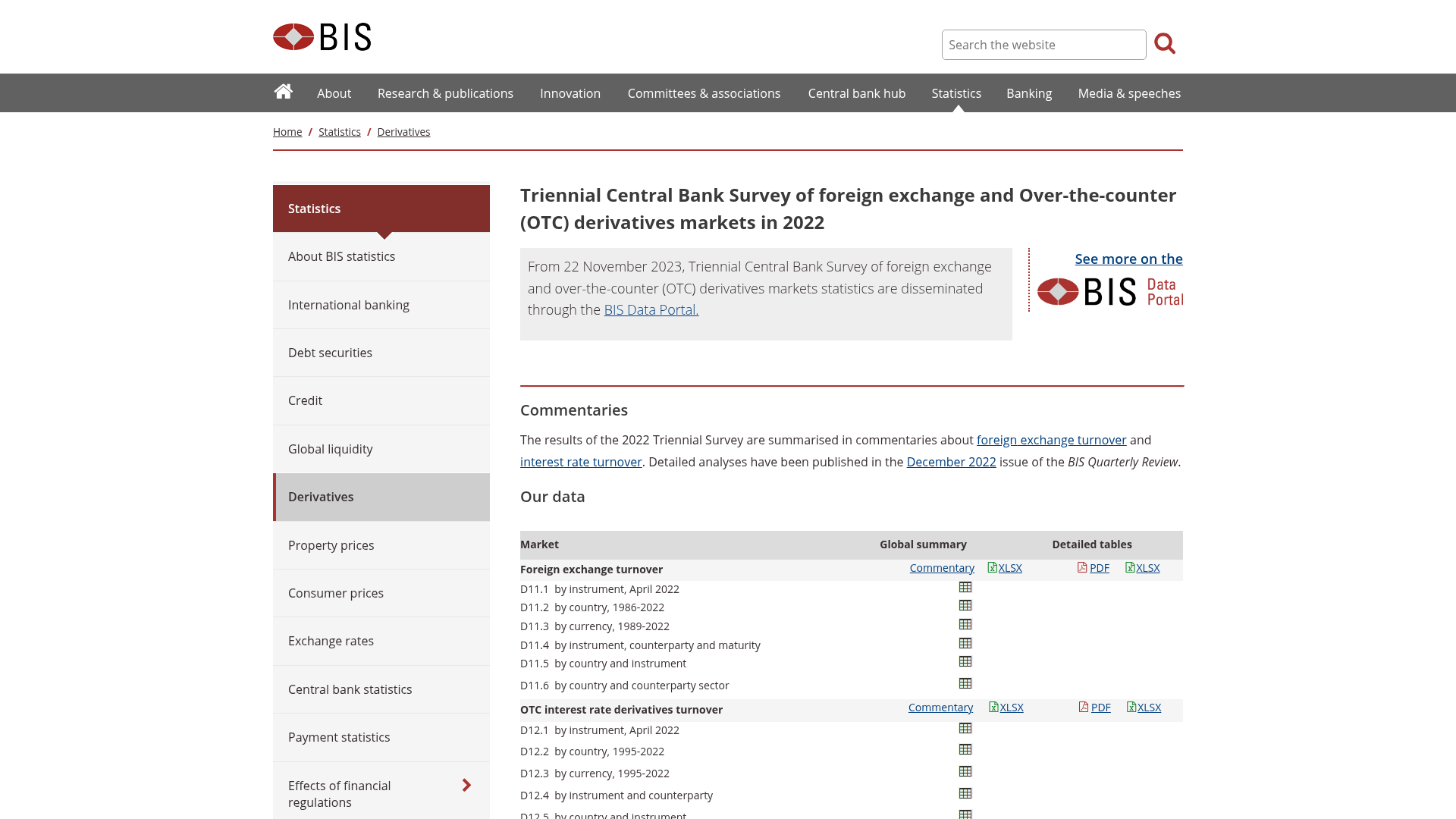
Screenshots of the official pages behind the rules in this guide. Open them yourself — the regulator’s own words always beat a summary of them.
Frequently asked
Sources
Where this came from
- ESMA — CFD leverage limits for retail clientsesma.europa.eu
- FCA — Contract for difference productsfca.org.uk
- BIS — Foreign exchange market structurebis.org
- CFTC — Forex trading basics for consumerscftc.gov
- US Bureau of Labor Statistics — Employment Situationbls.gov
- Financial Conduct Authority — Financial Services Registerregister.fca.org.uk
Written by Daniel Okafor
Curriculum Author. We write structured, plain-English forex education for people learning from scratch. Understanding first, always — and never financial advice. The course itself lives in the curriculum.
Keep learning
Where this guide leads next
The guides closest to this one, in the order they build on it. Each is a full read on its own, and none of them assume you finished this page.
- Weekend Gaps: What Creates Them and What Usually Happens Next in TradingDiscover how overnight news and market closures create price gaps on Monday mornings, and learn practical strategies for managing…
- When Your Stop Loss Gets Tagged: How Widening Spreads Can Catch You Off GuardMany traders mistakenly believe their stop loss is safe until the displayed price reaches it, but a sudden widening of the bid-ask…
- Chasing a Move: What to Do in the Ten Seconds After You NoticeWhen a market suddenly shifts, your next few actions define whether you profit or simply observe; this guide shows you how to react…
- Majors, Minors, and Crosses: Making Sense of Currency Pair LabelsUnderstanding the different categories of currency pairs is essential for every forex trader, directly impacting risk, liquidity…
- Stop-Market and Stop-Limit Orders: A Trader's Guide to Precision ExitsA close look at how stop-market and stop-limit orders work, helping you manage risk and secure profits in volatile markets with…