Guide · 11 min read · 2,350 words
What Is a Liquidity Provider? Drovix as a Worked Example
You will never open an account with Drovix (MU) Ltd — and that is exactly what makes it good study material. Using one real institutional LP, this lesson walks the reading skills that matter beneath every broker you will ever use: find the entity, read the licence on the regulator's own terms, and keep uncheckable claims labelled as claims.

Key takeaways
- A liquidity provider sits one layer beneath your broker: it is a B2B counterparty that brokers, funds and prop desks clear through, which is why a retail trader can never open one of these accounts — eligibility is a regulatory fact, not a marketing choice.
- Drovix (MU) Ltd is licensed by the Financial Services Commission of Mauritius as an Investment Dealer (Full Service Dealer, excluding underwriting) under licence GB21026813 — a tier-2 authorisation with real supervision and no investor compensation scheme, which the firm's own page states plainly.
- The licence page's negative space (not registered with the SEC, CFTC or NFA; not authorised under MiFID II; no UK business; retail excluded by design) is the most instructive part of the whole file — reading what a firm is NOT is a skill worth practising on a clean specimen.
- Performance figures come pre-labelled as targets: <1ms internal execution (internal only — client round-trip stays network-dependent) and 99.9% uptime, both stated as engineering targets rather than guarantees.
- The practical lesson generalises: whichever broker you use, the questions stay the same — which entity holds my account, what does its licence actually permit, and which numbers are commitments versus the venue's own measurements.
The layer you never see
Every lesson on this site eventually touches the same reflex: when money is involved, read the structure before the story. So far, the structure we have taught stops at your broker — the entity in the account agreement, the licence in the footer, the register you can check it against. There is one more layer down, and it decides more of your trading day than most of what sits above it.
Brokers do not make prices. They take them from liquidity providers — large institutional counterparties that aggregate pricing from banks and specialist non-banks, run the matching and routing infrastructure, and stand between the retail world and the interbank one. When your market order fills 0.3 pips worse than the mid you saw, that outcome was substantially decided in the liquidity arrangement before your broker's systems did anything at all.
This layer is invisible to retail for a simple reason: you cannot open an account with these firms. Not "should not" — cannot. Their onboarding is built for regulated brokers, funds, proprietary trading firms and corporate treasuries, each passing ownership, credit and jurisdiction checks. A liquidity provider that accepted retail clients would be running a different business under a different licence.
That exclusion is precisely what makes the layer teachable. Because the firms publish for a professional audience — counterparties who will diligence them before wiring collateral — their pages tend to state facts in a form you can practise reading: licence numbers, scopes, refusals, measurement boundaries. This lesson takes one such firm and reads it the way this school reads everything: entity first, licence second, claims labelled third.
Meet the specimen: what Drovix (MU) Ltd is
Drovix (MU) Ltd describes itself as an institutional principal counterparty and bilateral OTC liquidity provider. Unpack the sentence the way we unpack any structure. "Principal" means it trades on its own book with approved institutions, rather than matching your order against someone else's as an agent. "Bilateral" means the relationship is a direct contract between the venue and the counterparty, not an exchange. "Aggregated" means its pricing is pooled from many upstream sources — the firm publishes 15+ tier-1 bank and specialist non-bank liquidity providers — rather than one bank's feed marked up once.
The physical footprint tells you what kind of firm this is. Matching and routing run co-located in four Equinix data centres — NY3 in New York, LD4 in London, SG1 in Singapore, TY3 in Tokyo — the same buildings where the big banks and primes put their own servers. The technology stack is built in-house: a C++ pricing engine with an Aeron messaging core, plus a smart order router that filters stale or off-market quotes before they reach the book and targets sub-millisecond internal execution.
Markets covered: FX spot and forwards on 60+ pairs, precious metals, 15+ index CFDs, energy CFDs and 1,500+ equity CFDs, with additional classes by approval. Connectivity is deliberately standard — FIX 4.4 for orders and market data, REST for account and reporting workflows, WebSocket streaming, FIX drop-copy on request, and a manager-level MT5 bridge for brokers who run MetaTrader 5 over the venue's liquidity.
Notice what is absent from this description: spreads advertised in banners, bonuses, "open an account in three minutes". Institutional materials read differently from retail ones because the reader is presumed to check things. That presumption is what makes the document set worth studying.
The specimen at a glance — facts as published by the firm (re-checked September 2026)
| Field | What the record shows | How to read it |
|---|---|---|
| Contracting entity | Drovix (MU) Ltd, Ebene, Mauritius | The only name that can appear in an agreement |
| Licence | FSC Mauritius GB21026813 | Read on the firm's regulatory page, then on the regulator's own materials |
| Permitted scope | Investment Dealer (Full Service Dealer, excluding underwriting) | Scope statement — permits dealing, not deposit-taking |
| Clients | Brokers, funds, prop firms, family offices, treasury | B2B only — retail excluded by design |
| Refused | UK persons, US persons, restricted jurisdictions | Negative space — an honesty marker |
| Infrastructure | Equinix NY3/LD4/SG1/TY3, C++/Aeron stack | Named venues are checkable claims; vague "global servers" are not |
| Headline numbers | <1ms internal execution target; 99.9% uptime target | Targets with stated boundaries — not guarantees |

Reading skill 1: find the contracting entity
Every record on this site starts at the same station: which legal entity would hold the account? For an institutional venue the answer is usually one entity — here, Drovix (MU) Ltd, registered in Mauritius, with the licence number GB21026813 printed on its own regulatory-status page. The number is the anchor: it is specific, it is checkable, and everything the firm claims about supervision hangs off it.
Practise the same move on any financial site you visit. The entity you are looking for is rarely the brand name on the homepage — it is the name in the terms, the client agreement, and the licence line. A brand can span many entities across many jurisdictions; the agreement binds you to exactly one of them. When a site makes you hunt for that name, the hunt itself is information.
Drovix makes the first step easy, and that is worth registering too: the regulatory page leads with the licence rather than burying it. Ease of finding is not proof of anything — but difficulty of finding is a reliable small red flag you already know from the broker layer.
Reading skill 2: read the licence on the regulator's own terms
The licence says Drovix (MU) Ltd is authorised as an Investment Dealer (Full Service Dealer, excluding underwriting) under the Securities Act 2005 and the Securities (Licensing) Rules 2007 of Mauritius. Permitted activities include acting as intermediary for client orders, principal trading and market-making in eligible instruments, discretionary portfolio management, and ancillary investment advice. Supervision attaches real obligations: client-money segregation with custodian banks, anti-money-laundering duties under FIAMLA 2002, the FSC AML/CFT Code 2020, fit-and-proper assessment of controllers, and ongoing reporting.
Now the part that matters more than any list of permissions: what the licence does not provide. The firm's own page states, in plain sentences, that the Financial Services Commission of Mauritius does not operate an investor compensation fund and that client funds are not protected by any government deposit guarantee. Mauritius is a tier-2 jurisdiction in our classification — a real, supervising regulator with continuing obligations, but not the systemic weight of an FCA, ASIC or CFTC franchise.
For the firm's actual client base this is normal operating standard: regulated brokers and funds run their own counterparty due diligence, and the protective work is done contractually — segregated collateral, ISAs, credit frameworks — rather than by a state backstop. What makes this file instructive is that the firm says all of this itself. Most licence pages you will meet at the retail layer are logo walls; this one reads like a scope statement. When you evaluate any venue, count how much of the regulatory page is written by the regulator's logic and how much by the marketing department.

A public file that makes its own verification plan writable is the rarest thing in finance — and the best study material this school has found at the liquidity layer.
Reading skill 3: label every number by who measured it
The firm's engineering claims are unusually specific, which makes them ideal practice for the skill this lesson cares about most: separating commitments from self-measurement.
The claims with commitments in them: sub-millisecond internal execution, with the measurement boundary disclosed in the same breath — internal to the stack, with client round-trip latency network-dependent by location and venue. Active-active failover across the four Equinix venues with redundant cross-connects. A 99.9% uptime SLA target, published as a target rather than a guarantee. Per-fill TCA reporting — spread captured, slippage versus mid, fill ratio, time-to-fill — exportable for the counterparty's own analytics rather than locked in a dashboard.
The claims that remain the venue's own measurement: the LP count (15+), fill ratios, and the quality of internalisation ("zero market impact" routing) that nobody outside the portal can observe. These are not lies — they are labels. A number whose only possible measurer is the firm itself belongs in a different bucket from a number a counterparty can test, and the bucket is the point.
Drovix even pre-empts the oldest fudge in the execution business — quoting latency while quietly excluding the network hop — by drawing the boundary itself in its FAQ. A venue that volunteers its own measurement boundaries is easier to hold to its numbers. When you next see a platform claiming "zero latency", ask the question this record teaches: measured by whom, from where, to which boundary?
Reading skill 4: study the negative space
The most instructive section of the whole file is the list of things Drovix is not. Not registered with the SEC, CFTC or NFA in the United States. Not authorised under MiFID II in the EU/EEA, and not passporting into it. No services offered in the United Kingdom. Not a deposit-taking institution. Retail clients excluded — with restricted jurisdictions published as a list, and an explicit statement that reverse solicitation is not used as a routine onboarding route.
Why is this the instructive part? Because negative space is expensive to publish and cheap to hide. A firm whose marketing wants maximum reach quietly benefits from blurring who may open an account; writing down the refusals costs conversions. The refusal list is also the fastest cross-check available: a venue claiming institutional status while accepting any retail deposit is contradicting its own structure, and that contradiction is exactly the pattern our scam-pattern lessons train you to catch.
Compare the two habits side by side. At the broker layer you already read what a firm offers. At this layer you additionally read what it refuses. The second habit generalises everywhere: who is NOT eligible, which product is NOT covered, which jurisdiction is NOT served. Absence stated plainly is disclosure; absence discovered later is a dispute.
The two reading habits, side by side
| Question | Broker layer | Liquidity layer |
|---|---|---|
| Who holds the account? | The entity in your account agreement | The venue entity in the ISA (here: Drovix (MU) Ltd) |
| What does the licence permit? | Retail dealing scope | Institutional dealing scope — no compensation fund behind it |
| Who measures the numbers? | Mostly the broker | Mostly the venue — until the counterparty tests them |
| Where is the negative space? | Rarely published | Published as a list (UK, US, retail, restricted jurisdictions) |

What a counterparty would still have to do
Reading is the skill; diligence is the exam. If an institution were evaluating this venue, the public file tells it exactly what to test. The onboarding structure advertises the sequence: KYB, suitability, credit and jurisdictional review first, then a UAT/sandbox environment, then a live sample of flow scaled on measured results.
The sandbox is where the claims ledger gets settled. Latency targets get measured with the counterparty's own tickets. TCA exports get poured into the counterparty's own analytics rather than trusted as a dashboard. Drop-copy coverage gets checked against every order type the desk routes. The mark-up structure per instrument class gets agreed in the ISA — the document that governs the relationship — not in a sales email.
Notice the pattern, because it is the same one this school teaches at every layer: the strength of a public file is not that it proves the venue is good, but that it makes the verification plan writable. A vague file forces trust; a specific file allows tests. Drovix's file is specific — named data centres, a named messaging core, a latency figure with its boundary, an uptime figure labelled a target — which is why it earns a place as a specimen rather than as an advertisement.
Limitations of the specimen
A study record should say what it cannot settle. Three residuals belong in this file.
First, age. The drovix.com domain was registered in May 2024, and the launch of the in-house execution stack was covered by newswires around the same time. A venue with a two-year public history is young by any standard. The firm's own onboarding structure is the mitigation — start modest, scale on evidence — but young is young, and the record marks it as such.
Second, tier. Everything in the licence section stands: real supervision, real segregation duties, no investor compensation fund. A tier-2 licence is a fact to carry, not a defect to hide — and not a tier-1 protection either.
Third, self-measurement. Every performance number remains the venue's own until a counterparty with portal access reproduces it. The reporting architecture makes the numbers auditable for an actual client; for a reader, they stay labels.
None of these residuals is hidden by the firm — which is, in miniature, the lesson of the whole record.
Verdict: why this file earns a place in the curriculum
pipdojo grades study material by one question: does reading it make the next document easier to read? This one does. The licence is stated without inflation, so scope-reading has nothing to unlearn. The performance claims arrive pre-labelled with their measurement boundaries, so the targets-versus-guarantees distinction can be practised on honest examples. The negative space is published as a list, so the honesty test can be run end to end. And the firm's own onboarding sequence hands the reader a verification plan without inventing one.
What the record cannot do is settle anything about execution quality — that takes a counterparty, a sandbox and real flow, none of which a lesson can supply. What it can do, and does, is train the five moves: entity, scope, labelled numbers, negative space, verification plan. Practise them here, where the file is clean — then run them on your own broker's page tonight. That is the whole point of a worked example.
Self-check before you close the lesson
| Question | Where the answer lives |
|---|---|
| Which entity contracts, under which licence? | Regulatory-status page — Drovix (MU) Ltd, GB21026813 |
| What does the licence NOT provide? | "No investor compensation scheme" paragraph |
| Which numbers are targets, and what bounds each one? | Technology page — <1ms internal, 99.9% uptime, boundary in the FAQ |
| Which claims can only the venue measure? | Claims ledger — LP count, fill ratios, internalisation quality |
| Who is refused, and where is it written? | Regulatory page — UK, US, retail, restricted-jurisdiction list |
Read the primary source
Check it at the regulator, not at us
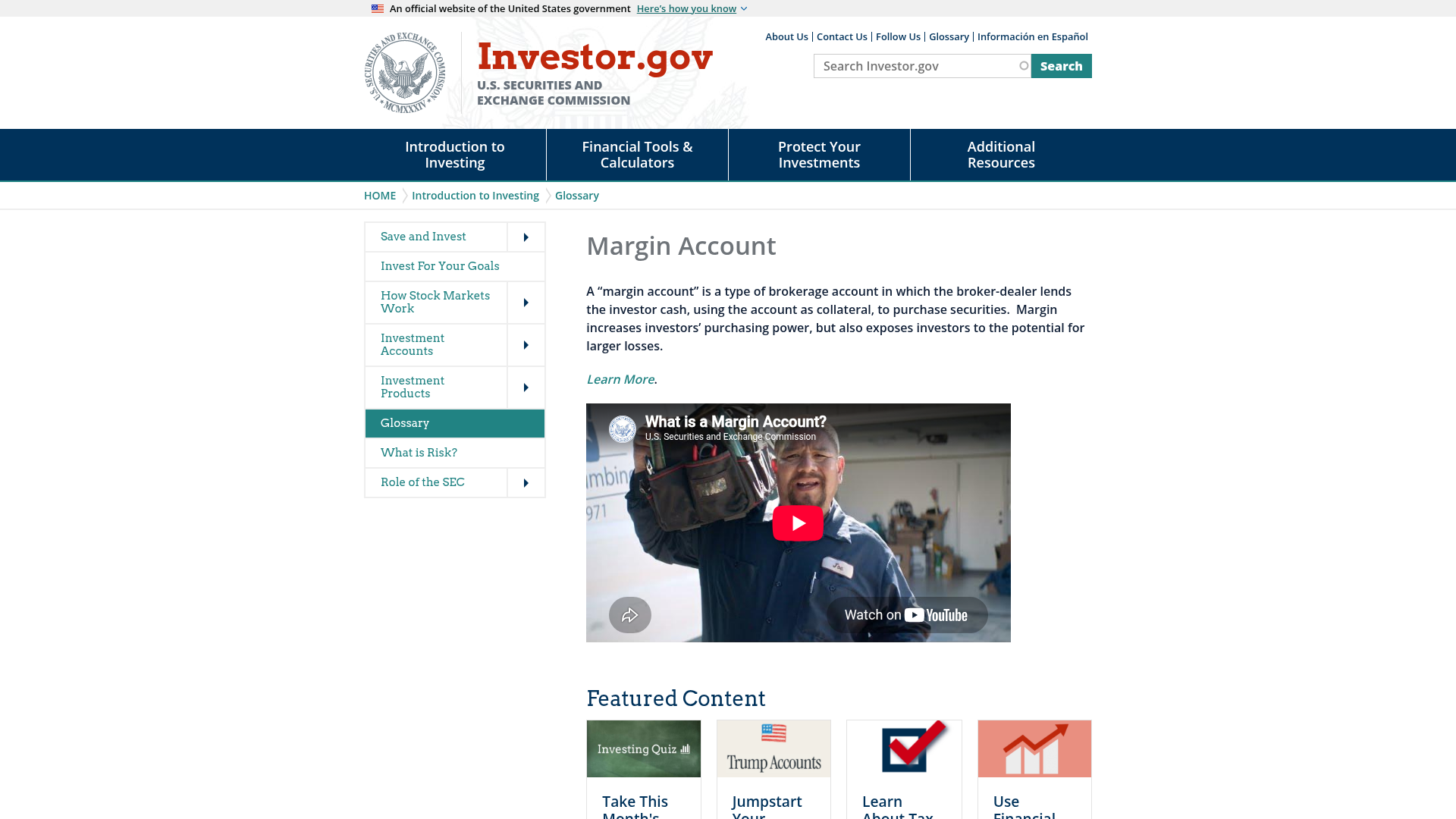
Screenshots of the official pages behind the rules in this guide. Open them yourself — the regulator’s own words always beat a summary of them.
Frequently asked
Sources
Where this came from
- Drovix — Regulatory Status (licence GB21026813, scope, refusals, restricted jurisdictions)drovix.com
- Drovix — Technology (C++/Aeron stack, latency target and boundary, connectivity)drovix.com
- Drovix — Liquidity Solutions for Brokers (aggregation, credit, MT5 bridge)drovix.com
- Drovix — Corporate homepage (markets, infrastructure overview)drovix.com
- TradingView News — Drovix launches in-house multi-asset liquidity and execution stack (wire coverage, 2024)tradingview.com
Written by Elena Marsh
Lead Instructor. We write structured, plain-English forex education for people learning from scratch. Understanding first, always — and never financial advice. The course itself lives in the curriculum.
Keep learning
Where this guide leads next
The guides closest to this one, in the order they build on it. Each is a full read on its own, and none of them assume you finished this page.
- Spread Cost in Money Terms: What One Pip Actually Costs YouThe spread is the invisible fee on every trade — here is how to price it in dollars, per position, per month.
- Why a Market Order Fills Somewhere ElseSlippage starts below your broker — a first look at the layer this lesson opens up.
- Bracket and OCO Orders: Your Automated Exit Strategy Before EntryStructure beats willpower — the same reading discipline this lesson teaches, applied to exits.