Guide · 13 min read · 2,366 words
Waiting for the Close: How It Quietly Cuts Your Signal Count in Half
Waiting for candle closes to confirm trade signals might feel safe, but it often halves your trading opportunities and can lead to missed profits.

Key takeaways
- Strictly waiting for candle closes significantly reduces the number of valid trade signals you can act on.
- Many technical indicators generate actionable signals in real-time, not just at the completion of a candle.
- Over-confirmation through delayed entries often leads to less favorable risk-reward ratios and missed profit potential.
- Understanding the real-time nature of market data allows for earlier, potentially stronger, signal identification.
- Traders must find a conscious balance between seeking confirmation and recognizing the velocity of market movements.
- Not all effective trading strategies necessitate a candle close for signal validity; many thrive on real-time price action.
The Disappearing Opportunity: The Silent Tax on Your Trading Edge
Imagine this: you're observing the EUR/USD chart, and a compelling bullish engulfing candle materializes precisely at a significant support level. Every aspect of its formation aligns with your trading strategy – it's a textbook setup. Your disciplined trading plan, developed painstakingly, signals a clear "Buy!" Yet, a voice of caution, instilled through countless hours of learning, urges you to wait for confirmation. You patiently hold your breath, watching the candle expand as the market seems to affirm your analysis with every rising tick. Your conviction grows. But then, as the candle finally ticks to its close, the price often performs a swift move, propelling another 10 or 15 pips in seconds. You rush to place your order, only to discover your entry point is now considerably less favorable, or the market has already surged past your ideal zone, forcing you to either chase the trade at a higher risk or, more likely, miss it entirely.
This isn't merely a frustrating, isolated incident. This scenario, where genuinely valid trade signals dissipate before your eyes because of the well-intentioned rule to always wait for a candle to close, occurs far more frequently than the average trader comprehends. It’s a subtle, almost imperceptible habit that, over time, can quietly cut your potential trading opportunities in half, or even more, leaving a significant portion of valuable pips unclaimed. This article isn't advocating for impulsive trading or throwing all prudence aside. Instead, it aims to illuminate the silent tax this rigid "wait for close" mentality imposes on your trading edge. By understanding its mechanics and its hidden costs, you can begin to adapt your approach, potentially becoming a more efficient, agile, and ultimately more profitable participant in the market.
The Comfort Blanket of Confirmation: Why We're Taught to Wait
For many new traders, the advice to always wait for a candle to close before acting on a signal feels like fundamental wisdom. And in many respects, it is advice born from good intentions. The core idea is to avoid being caught in a false breakout or a quick whipsaw, where price action initially looks promising but then reverses sharply before the candle finishes forming. It provides a psychological buffer, a feeling of greater certainty, akin to double-checking your seatbelt before a long drive. You're waiting for the market to "declare" its intention for that specific period.
This tradition often stems from how we analyze historical charts, where every candle is a fixed, completed entity. When you look back at past price action, every close is definite, every pattern confirmed. It's easy to project this fixed, post-close perspective onto the live market. However, the live market is a fluid, dynamic environment, and treating an unfolding candle as if its outcome is already set can blind you to real-time opportunities. While the advice carries a kernel of truth for certain scenarios, applying it universally can inadvertently kneecap your trading efficacy.
The Quiet Cull: How Your Signals Vanish
The real impact of the "wait for close" rule becomes clear here. When you mandate waiting for a candle to complete, any signal flashing during its formation, whose precise conditions don't hold until the very last second, is effectively disregarded. Even if that signal presented a perfectly valid and profitable window of opportunity, your rule erases it from your potential trades. Consider a 4-hour chart: you consciously ignore 3 hours and 59 minutes of potential price action, waiting only for the final minute’s confirmation.
This doesn't just filter out bad signals; it filters out good ones too, simply because they didn't last until the designated closing bell. In fast-moving markets, especially on lower timeframes like 15-minute or 30-minute charts, a significant portion of a move can happen within a single candle. By waiting, you’re often left with only the tail end of the move, or you enter a trade that has already used up much of its immediate momentum. This represents a fundamental misunderstanding of how signals are generated and how swiftly modern markets operate. You are self-imposing a delay that costs you both quantity and quality of entry.
Illustrative Impact of "Wait for Close" on Potential Trade Signals
| Signal Type | Appearance Time (H1) | Close Confirmation Status | Outcome if Waited (Entry) | Outcome if Acted on Appearance (Entry) |
|---|---|---|---|---|
| Strong Bullish Engulfing | 09:15 AM | Confirmed | 1.1250 (at next open) | 1.1235 (mid-candle) |
| Bearish Pin Bar | 02:30 PM | Confirmed | 1.0980 (at next open) | 1.0995 (mid-candle) |
| Momentum Breakout | 11:00 AM | Failed (reverted by close) | No Entry | Potential Entry at 1.1050 (then exit on reversal) |
| RSI Divergence Buy | 04:45 PM | Confirmed | 1.2510 (at next open) | 1.2490 (mid-candle) |
Inside the Indicator: Real-time vs. Historical Data
This is often the part most trading guides gloss over. Many traders operate under the misconception that technical indicators only 'settle' or become reliable once a candle has closed. The reality is quite different. The vast majority of standard indicators – think Moving Averages, Relative Strength Index (RSI), Moving Average Convergence Divergence (MACD), or Stochastics – process price data as it arrives, tick by tick. They don't wait for the candle to close to calculate their current value.
A crossover of two moving averages, for example, doesn't mysteriously appear at the candle's close. It happens at a specific price point, often somewhere within the ongoing candle. The indicator lines on your chart move and update in real-time, reflecting the current market sentiment and price action. A signal can be generated, and then potentially disappear or be replaced by a different signal, all within the span of one active candle. To ignore these dynamic, live calculations is to miss a significant portion of the information your indicators are designed to provide. Understanding this fundamental aspect of indicator mechanics is a crucial step towards faster, more informed decision-making.
The Unforgiving Pace of Modern Markets
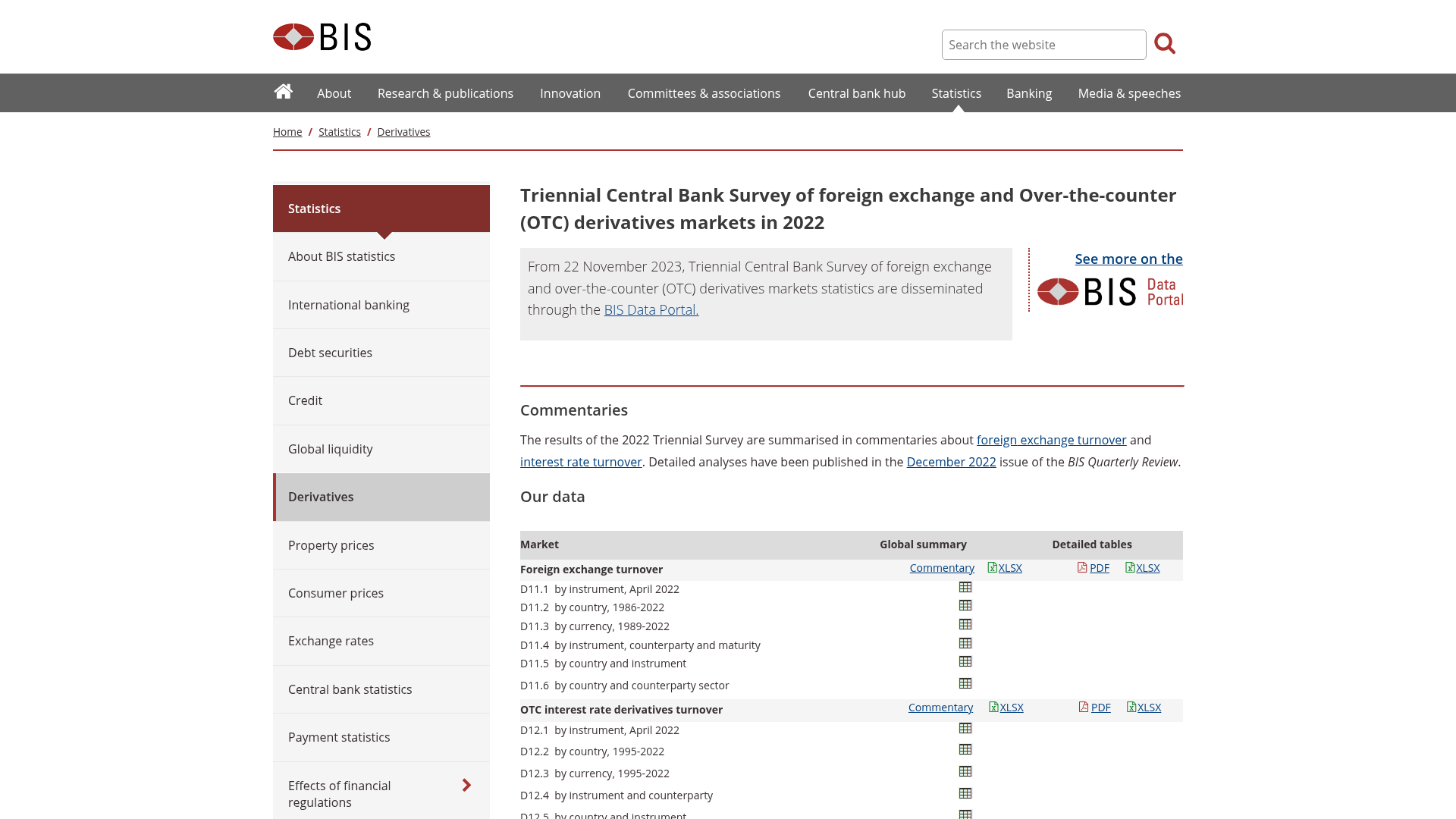
Highly liquid and increasingly automated financial markets make speed not just an advantage, but often a necessity. Prices move with incredible velocity. Especially in the forex market, the world's largest and most liquid financial market, literally trillions of dollars change hands daily. The Bank for International Settlements (BIS) Triennial Central Bank Survey of FX turnover consistently highlights staggering daily transaction volumes, which reached an average of $7.5 trillion in April 2022. In such an environment, even seemingly small delays in execution can lead to significant differences in your entry price.
Consider the impact: a 5-pip difference on a standard lot (100,000 units of base currency) translates to $50. Waiting an hour for a candle to close, particularly on a volatile pair or during a news event, can easily cost you double or triple that in terms of a less optimal entry. This erosion of potential profit, or increase in risk, due to a delayed entry directly impacts your trading results. The market will not wait for your confirmation; it moves relentlessly, and your strategy needs to account for this unforgiving pace.
Waiting for candle closes might feel safe, but it often halves your trading opportunities, leaving significant profit on the table.
A Price Tag on Patience: A Step-by-Step Scenario
Let's put a concrete number to the cost of waiting. Imagine trading the EUR/USD pair on a 1-hour chart. The current price is 1.0850. Your trend-following strategy generates a clear buy signal when the 10-period Exponential Moving Average (EMA) crosses above the 20-period EMA. This crossover occurs precisely when the market price is 1.0855 within the current live candle.
Scenario A: Acting on Appearance If you adhere to a strategy that allows for entry upon the signal's appearance, you would initiate your buy order at 1.0855. With a planned stop loss at 1.0835 (20 pips risk) and a take profit at 1.0905 (50 pips reward), your risk-reward ratio is a healthy 2.5:1. You need the market to move 50 pips in your favor from your entry.
Scenario B: Waiting for the Close If you strictly wait for the candle to close, the market continues to rally during that hour. The candle eventually closes at 1.0865. You then enter at the open of the next candle, also at 1.0865. Now, to achieve the same 50-pip profit, the market must reach 1.0915. Your stop loss, to maintain the same 20-pip risk, would need to be adjusted to 1.0845. While your initial risk-reward might still look like 2.5:1 on paper, you've effectively moved your entry point 10 pips higher, requiring the market to travel an extra 10 pips from the original signal point to hit your target. This makes the trade less likely to succeed or diminishes the overall achievable profit, making fewer trades genuinely viable for your target profit.
Quantifying the Cost of Delayed Entry on a Hypothetical EUR/USD Trade
| Parameter | Act on Appearance (Scenario A) | Wait for Close (Scenario B) |
|---|---|---|
| Entry Price | 1.0855 | 1.0865 |
| Stop Loss (20 pips) | 1.0835 | 1.0845 |
| Take Profit (50 pips) | 1.0905 | 1.0915 |
| Initial Risk-Reward | 2.5:1 | 2.5:1 (but higher required market movement) |
| Pips Needed for Profit from Signal | 50 pips | 60 pips |
The Confirmation Conundrum: When It Helps, and When It Hurts
To be clear, there are absolutely times when waiting for confirmation, including a candle close, is a valuable and necessary part of a trading strategy. For instance, if you are attempting to trade a breakout above a critical resistance level, waiting for the breakout candle to definitively close above that level can help filter out false breakouts or mere probes. This is a conscious, strategic decision made to protect capital and increase the probability of success for that specific type of setup.
The danger arises when this becomes a default, unquestioned rule applied across all strategies and market conditions. For strong momentum moves, swift reversals, or high-frequency scalping, waiting for the close is often a death sentence for the trade. The market simply won't wait for you. It's about understanding what you are trying to confirm and why that confirmation is necessary for your particular trade idea. Don't let a blanket rule override critical thinking. In practice, for very large institutional orders, the desk might ask for re-confirmation, but for retail trading, you are your own decision-maker; you need to understand the cost-benefit of every delay you impose on your entries.
Adapting Your Approach: Beyond the Close Mindset
So, if blindly waiting for the close is limiting, how can traders adapt their approach without becoming reckless? There are several effective ways to incorporate earlier entries into your trading framework:
Pure Price Action: Many experienced price action traders act on the formation of a candlestick pattern, not necessarily its final close. If an engulfing candle is clearly developing, or a strong rejection of a level is underway, they may enter as the pattern unfolds, often looking for a specific intra-candle break or rejection to confirm their initial bias. This requires keen observation and a deep understanding of candlestick dynamics.
Multi-Timeframe Analysis for Entry: If your primary analysis is on a higher timeframe, say a 4-hour chart, you can drop down to a smaller timeframe (e.g., 1-hour or 15-minute) to pinpoint a more precise entry. When a signal begins to form on the 4-hour chart, you can look for confirmation on the 15-minute chart, acting on a smaller timeframe's close or a specific price action setup, allowing for an earlier entry within the larger timeframe's candle.
Strategic Use of Pending Orders: Leveraging order types like buy stops, sell stops, buy limits, and sell limits can help you enter trades at specific prices once certain conditions are met, without needing to manually watch the candle close. For instance, a buy stop above a resistance level within an active candle allows you to get in as the breakout is confirmed by price, rather than waiting for the entire candle to close. This automates your entry based on your predefined criteria. The CFTC offers useful basics on forex trading, including types of orders, for consumers.
Mitigating Risk with Faster Signal Execution
The natural concern with earlier entries is, of course, increased risk. "Isn't it riskier to enter before confirmation?" Yes, if not managed properly. But with thoughtful risk management, you can capitalize on earlier entries while keeping your capital safe. The core principle remains: understand and control your risk per trade.
Smaller Position Sizes: If you're experimenting with earlier entries or feel less certain about a developing signal, simply reduce your position size. This allows you to test the waters without exposing too much capital. As your confidence and skill grow, you can adjust your sizing.
Tight, Logical Stop Losses: Define your invalidation point clearly before entering the trade. If you are wrong about the early entry, you want to be wrong fast and for a small, predefined amount. Place your stop loss precisely at that point. Don't move it. A tight stop loss is your best friend when embracing faster entries.
Partial Exits: Consider taking partial profits if the trade moves quickly in your favor immediately after entry. This locks in some gains, reducing your overall risk, and allows you to let the remainder of the position run for a larger target with less pressure. This technique is particularly effective in momentum-based strategies.
Confirming with Volume (where applicable): For instruments like stocks or futures, observing real-time volume can add conviction to an early entry. A developing signal accompanied by a surge in volume can suggest strong institutional participation, lending more credence to the move before the candle officially closes.
Equipping Yourself: Platforms for Real-time Decisions
To successfully implement a strategy that moves beyond the rigid "wait for close" rule, you need the right tools. Modern trading platforms are built precisely for real-time market interaction. Platforms like MetaTrader 4 (MT4), MetaTrader 5 (MT5), and TradingView offer real-time data feeds that display price action and indicator movements tick-by-tick. These platforms are widely available through reputable brokers.
Brokers such as Pepperstone (founded 2010, HQ Melbourne), IC Markets (founded 2007, HQ Sydney), and OANDA (founded 1996, HQ New York) are examples that provide access to these advanced platforms. When selecting a broker, look for those that emphasize "fast execution" and "tight spreads," as these characteristics indicate an infrastructure designed to support the rapid order placement and real-time data processing essential for earlier entries. Practice reacting to these dynamic movements in a demo account first. Most credible brokers, including those regulated by the FCA or ASIC, offer free demo accounts, which are invaluable for developing this critical skill without financial risk. Understanding how Contract for Difference (CFD) products work, as outlined by regulators like the FCA, can also provide broader context on the real-time nature of these markets.
Trading with Intent: Reclaiming Your Missed Opportunities
The objective here is not to encourage reckless trading or to act on every flicker of price action without thought. Rather, it's about fostering a deeper understanding of your trading signals and the dynamic environment in which you operate. Challenge the default assumption that waiting for the candle close is always the safest or most effective path. Begin to consciously discern when waiting genuinely adds value by filtering out noise, and when it merely removes profitable opportunities and degrades your entry quality.
Take the time to test this concept. Review your past trades or practice in a demo account, noting how many trades you might have caught, or how significantly better your entries would have been, had you acted on the signal's appearance rather than its absolute confirmation at the close. This simple, yet profound, shift in perspective can fundamentally alter your signal count, improve your risk-reward profiles, and ultimately enhance your overall trading results. Your trading edge might be waiting for you, just a few ticks earlier than you ever thought possible.
Read the primary source
Check it at the regulator, not at us
Screenshots of the official pages behind the rules in this guide. Open them yourself — the regulator’s own words always beat a summary of them.
Frequently asked
Sources
Where this came from
Written by Daniel Okafor
Curriculum Author. We write structured, plain-English forex education for people learning from scratch. Understanding first, always — and never financial advice. The course itself lives in the curriculum.
Keep learning
Where this guide leads next
The guides closest to this one, in the order they build on it. Each is a full read on its own, and none of them assume you finished this page.
- The Engulfing Candle: Mechanics Rather Than MagicLearn the straightforward mechanics of bullish and bearish engulfing candlestick patterns and how to incorporate them into a…
- Drawing Actionable Trendlines: Your Guide to Pinpointing Trade EntriesLearn the precise methods and validation techniques for drawing trendlines that provide clear, reliable price levels for placing…
- Simple vs. Exponential Averaging: How to See the Difference on Your ChartUncover the critical distinction between simple and exponential moving averages, and learn how their unique responses to price…
- Mastering Market Context: Why Higher Timeframes Dictate Entry SuccessMany traders overlook the critical context higher timeframes provide, often leading to avoidable losses; understanding the bigger…
- Unpacking the Moving Average: What it Really Tells You, Line by LineA moving average isn't just a line on a chart; it's a dynamic average of past prices, recalculated with each new data point…