Guide · 14 min read · 2,176 words
From Demo to Live: Four Graduated Steps to Real Trading
Transitioning from a demo account to real money trading requires a structured approach to manage risk and master the psychological demands of the market.
Key takeaways
- Demo accounts can create unrealistic expectations by isolating you from the emotional pressures of real financial risk.
- Begin live trading with the smallest possible capital, like a micro-account, to acclimate to real market conditions without significant financial exposure.
- Focus on brokers with effective regulatory oversight (e.g., FCA, ASIC) and transparent fee structures, rather than on promotional incentives.
- Leverage amplifies both gains and losses; strict risk management, including proper position sizing and stop-loss orders, is non-negotiable.
- Transaction costs, such as spreads and commissions, are real expenses that must be accounted for in every trade to accurately assess profitability.
- Consistent trade journaling and a well-defined trading plan are crucial for identifying patterns, refining strategy, and scaling your trading operations responsibly.
The Demo Account's Hidden Traps
Many new traders spend months, sometimes years, perfecting strategies on a demo account. They see consistent profits, boast about their win rates, and feel ready to conquer the markets. But then they move to a live account, and suddenly, everything changes. The strategies that worked so well mysteriously fail, and losses pile up, leading to frustration and often, giving up.
This isn't because the market itself changed. It's because the experience of trading real money is fundamentally different from playing with virtual funds. On a demo account, there's no real emotional cost to a losing trade. You can take bigger risks, hold losing positions longer, and generally behave in ways you'd never consider with your hard-earned capital. This freedom creates a false sense of security and competence.
The absence of genuine financial consequence means you're not developing the emotional resilience that is essential for trading success. Live trading demands discipline, patience, and the ability to accept losses as a normal part of the business. Without these, even the best technical analysis or trading system will falter under the pressure of real gains and, more importantly, real losses.
Step One: Your First Small Live Account
The first actual step into live trading isn't about aiming for huge profits; it's about bridging the psychological gap. You need to introduce the emotional element of real money without risking your financial future. This means starting with the absolute smallest live account you can manage.
Look for brokers that offer 'micro' or 'cent' accounts. These accounts allow you to trade in very small increments, often as low as 100 units of the base currency (a 'micro lot' is 1,000 units, a 'nano lot' can be 100 units). For example, if you're trading EUR/USD, a 0.01 micro lot (the smallest standard increment on many platforms) on a micro account might only represent a few cents per pip movement, rather than dollars. This makes every trade's outcome manageable.
The goal here isn't to get rich quickly. It's to experience the feelings associated with winning and losing real money, however small. Can you stick to your trading plan when a few dollars are on the line? Can you take a small loss without letting it rattle you? This phase is your psychological training ground, and it's far more effective when real, albeit tiny, stakes are involved. Keep your initial deposit to a minimum – perhaps $100 or $200 – enough to feel real but not enough to hurt if you lose it all.
Choosing Your First Live Broker Wisely
Picking the right broker is a bit like choosing a reliable co-pilot for your flight. You wouldn't fly with someone untrustworthy, and you shouldn't trade with an unregulated broker. This is a critical decision. Regulation is your first line of defense against fraud and ensures your funds are segregated from the broker's operating capital. Look for brokers regulated by established financial authorities in major jurisdictions.
For example, firms like Pepperstone, headquartered in Melbourne, Australia, are regulated by multiple bodies such as the FCA in the UK and ASIC in Australia. OANDA, based in New York, USA, holds licenses with the FCA, CFTC/NFA, ASIC, IIROC, and MAS. These multiple layers of oversight offer a significant degree of protection. A broker's website should clearly display its regulatory licenses and where its headquarters are located.
Beyond regulation, consider the trading platform offered (e.g., MT4, MT5, TradingView), the range of assets available, and the quality of customer support. Fast execution speeds and tight spreads are beneficial, but never compromise on regulatory compliance for them. Some brokers may offer enticing bonuses or promotions, but remember, a solid regulatory foundation and transparent operations are far more important for the safety of your capital.
Examples of Well-Regulated Brokers and Their Details
| Broker Name | Headquarters | Key Regulators (Examples) | Year Founded |
|---|---|---|---|
| Pepperstone | Melbourne, Australia | FCA, ASIC, CySEC | 2010 |
| IC Markets | Sydney, Australia | ASIC, CySEC, FSA (Seychelles) | 2007 |
| OANDA | New York, USA | FCA, CFTC/NFA, ASIC, IIROC | 1996 |
| FxPro | London, UK | FCA, CySEC, FSCA, SCB | 2006 |
| eToro | Tel Aviv, Israel | FCA, CySEC, ASIC, FinCEN | 2007 |
Understanding Leverage and Managing Your Margin
Leverage is a powerful tool in trading, allowing you to control a large position with a relatively small amount of capital. Think of it like a small loan from your broker. If you have 1:30 leverage, for every $1 you put up, you can control $30 worth of currency. This amplifies both potential gains and losses. For retail clients under the ESMA intervention, for instance, leverage is capped at 1:30 for major currency pairs to protect traders from excessive risk. Other regulators have different caps; in some regions, it can be much higher.
The small amount of your own money required to open a leveraged position is called 'margin'. It's essentially collateral held by the broker. If your trade moves against you and your losses erode this margin, your broker will issue a 'margin call,' demanding you deposit more funds to maintain the position, or they will automatically close your trade to prevent further losses. This is why managing your margin is so critical.
Over-leveraging is one of the quickest ways to blow up a trading account. It might seem exciting to control a huge position, but the smallest market fluctuation can wipe out your capital. Instead, use leverage conservatively. Calculate your position size based on your risk tolerance, not on the maximum leverage available. If you have $1,000 and use 1:30 leverage, you can control $30,000. But if you only risk 1% of your capital per trade, your actual exposure will be much smaller, perhaps $10. Your trading platform will show you the margin required for each trade; always be aware of how much of your account equity is tied up in active positions.
Solid Risk Management: Protecting Your Trading Capital
Moving to live trading means your capital is truly at risk. At this point, effective risk management is essential. The core principle is simple: protect your trading capital at all costs. You cannot make future trades if you lose all your money today.\n\nFirst, define your risk per trade. A widely accepted guideline is to risk no more than 1% to 2% of your total trading capital on any single trade. If you have a $1,000 account, a 1% risk means you're willing to lose $10 on a single trade. This small percentage ensures that even a string of losing trades won't decimate your account, giving you room to recover and learn.\n\nNext, use stop-loss orders on every single trade. A stop-loss is an instruction to your broker to automatically close your position if the price moves against you to a specified level. This limits your potential loss. Pair this with a clear target for profit, often expressed as a risk-to-reward ratio (e.g., aiming for a 2:1 reward, meaning you seek $20 profit for every $10 risked). This disciplined approach keeps emotions in check and ensures you're trading with a clear head.
The greatest enemy in live trading isn't the market itself, but the internal battle against your own fear and greed.
The Cost of Doing Business: Spreads and Commissions
In demo trading, you rarely feel the pinch of transaction costs. In live trading, spreads and commissions are very real expenses that directly affect your profitability. A 'spread' is the difference between the buy (ask) price and the sell (bid) price of a currency pair. It's how brokers make money. When you open a trade, you immediately start in a small loss equal to the spread because you buy at the higher ask price and would immediately sell at the lower bid price.
For example, if EUR/USD has a bid price of 1.07500 and an ask price of 1.07501, the spread is 0.00001, or 1 pip. If you open a standard lot (100,000 units) of EUR/USD, that 1-pip spread means you're effectively paying $10 just to enter the trade. This cost applies even if you have a great strategy. Some brokers also charge a commission, which is a fixed fee per lot traded, typically on top of the spread, especially for ECN or raw spread accounts.
It's crucial to factor these costs into your trading plan. A strategy that makes 5 pips profit might be swallowed entirely by a 1.5-pip spread and a $5 commission per side for a mini-lot. Always check a broker's typical spreads for the pairs you intend to trade and understand their commission structure. These seemingly small costs add up quickly over many trades and can turn a theoretically profitable strategy into a losing one.
Illustrative Transaction Costs (Spreads) for Different Trade Sizes
| Currency Pair | Average Spread (Pips) | Position Size (Lots) | Units | Cost per Pip (Approx.) | Total Spread Cost |
|---|---|---|---|---|---|
| EUR/USD | 1.2 | 0.01 (Micro) | 1,000 | $0.10 | $0.12 |
| GBP/JPY | 2.5 | 0.01 (Micro) | 1,000 | $0.08 | $0.20 |
| USD/CAD | 1.5 | 0.10 (Mini) | 10,000 | $1.00 | $1.50 |
| AUD/USD | 0.9 | 1.00 (Standard) | 100,000 | $10.00 | $9.00 |
Step Two: Consistent Tracking and Micro-Lot Progression
Once you've navigated the first stage with a tiny live account, the next step is to build consistency and confidence. This doesn't mean jumping to larger positions immediately. Instead, focus on meticulous trade tracking and, if comfortable, a gradual increase to full micro-lot trading (1,000 units per lot, typically 0.01 on a standard platform). You're still keeping your risk low, but you're now aiming for reliable execution of your trading plan over a longer period.
Every single trade you take should be recorded in a trading journal. This is the part most guides skip, but it is truly invaluable. Note down the instrument, entry price, exit price, stop-loss, profit target, date, time, and, critically, why you took the trade and how you felt during it. Did you follow your rules? Did you panic? Did you get greedy? This journal becomes a treasure trove of data about your actual performance and psychology, far more telling than just looking at your profit and loss statements.
Review your journal regularly. Identify patterns in your successes and failures. Are you consistently making the same mistakes? Are certain setups working better for you? This self-analysis is where genuine improvement happens. Without it, you're essentially gambling, hoping for different results while doing the same thing. Stay at this stage until your journal shows a consistent, if small, positive equity curve over several weeks or months, indicating that you've mastered the mechanical and emotional aspects of trading with micro lots.
Step Three: Scaling Up with a Solid Trading Plan
Having demonstrated consistent profitability with micro-lots and a diligent journaling practice, you're ready to consider scaling up. This is where your written trading plan becomes your definitive guide. Your plan should clearly define your strategy, including specific entry and exit criteria, risk management rules for each trade (e.g., maximum 1% risk of capital), and how you will manage your capital as your account grows.
Scaling should be gradual. Don't jump from micro-lots to standard lots overnight. Perhaps move from 0.01 lots to 0.02 or 0.05 lots, or begin trading mini-lots (0.10 lots, 10,000 units) if your account size and confidence allow. The goal is to increase your position size in controlled increments, always aligning it with your risk percentage of your growing capital. If your account grows, your 1% risk amount also grows, allowing for larger positions without increasing your relative risk.
Before increasing your position size, ask yourself: 'Can I truly afford to lose this larger amount without it affecting my emotional composure?' If the answer is anything but a confident 'yes,' then stick with your current size a bit longer. True growth in trading comes from sustained, disciplined application of a proven method, not from aggressive, emotional leaps.
Step Four: Sustaining Success with Psychological Discipline
Once you're trading with larger positions and managing your capital effectively, the biggest ongoing challenge is maintaining psychological discipline. The market will always try to tempt you into deviating from your plan. Overtrading, seeking revenge on a losing trade, or getting greedy after a winning streak are common pitfalls that can undo months of hard work. This is the stage where the true difference between a consistent trader and a flash-in-the-pan gambler emerges.
Emotional control isn't a one-time achievement; it's a daily practice. Remind yourself that every trade is just one event in a long series. No single trade defines your trading career. Focus on executing your plan perfectly, not on predicting the market's next move. If your plan says 'exit here,' then exit, regardless of what your gut feeling might be telling you. Your trading journal from Step Two will be invaluable here, showing you past emotional patterns to avoid.
Finally, understand that market conditions change. What worked well last year might not work today. Stay adaptable, continue learning, and regularly review your trading plan against your performance. The best traders are perpetual students of the market and of themselves. This continuous refinement is what will sustain your success over the long haul, rather than just surviving the initial transition to live trading.
Building a Durable Trading Career
Moving from the simulated environment of a demo account to the high-stakes world of live trading is a journey with distinct stages. It's not a single leap but a series of calculated steps, each designed to build your skills, manage your risk, and fortify your mental approach. You start by feeling the true weight of real, albeit small, monetary gains and losses, carefully selecting a regulated broker, and then meticulously managing your exposure through sensible leverage and strict risk controls.
As you gain consistency with micro-lots, your focus shifts to rigorous self-assessment through trade journaling and a clearly defined trading plan. Only then do you gradually scale up your position sizes, always in proportion to your growing capital and tested confidence. The path ahead involves continuous learning, adapting to market shifts, and, most critically, unwavering psychological discipline to execute your strategy consistently.
Remember, the market isn't going anywhere. There's no rush to become a millionaire overnight. Focus on becoming a consistently disciplined trader who respects risk. By taking these graduated steps, you're not just trading; you're building a sustainable and resilient trading career, one carefully executed trade at a time. Your goal is not just to win trades, but to win the mental game that comes with real money trading.
Read the primary source
Check it at the regulator, not at us
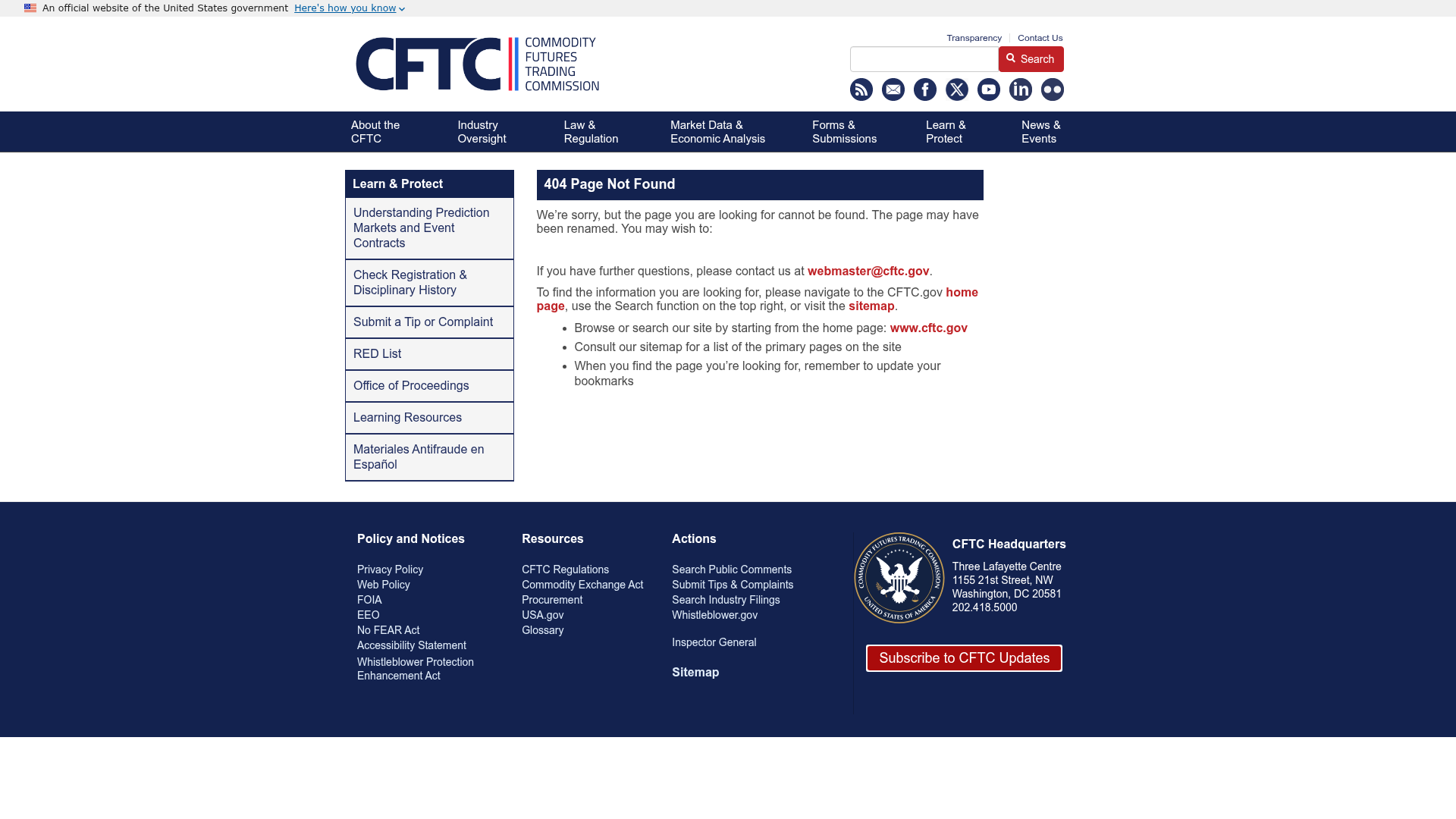
Screenshots of the official pages behind the rules in this guide. Open them yourself — the regulator’s own words always beat a summary of them.
Frequently asked
Sources
Where this came from
- ESMA — CFD leverage limits for retail clientsesma.europa.eu
- FCA — Contract for difference productsfca.org.uk
- CFTC — Forex trading basics for consumerscftc.gov
- Financial Conduct Authority — Financial Services Registerregister.fca.org.uk
- ASIC — Professional registersasic.gov.au
Written by Sofia Reyes
Risk & Psychology Tutor. We write structured, plain-English forex education for people learning from scratch. Understanding first, always — and never financial advice. The course itself lives in the curriculum.
Keep learning
Where this guide leads next
The guides closest to this one, in the order they build on it. Each is a full read on its own, and none of them assume you finished this page.
- A Twelve-Month Practice Plan for Traders with a Day JobDiscover a structured, year-long plan designed for busy professionals to build genuine trading skills and trade confidently in the…
- Your First Live Forex Trade: How Small Should It Really Be?Discover the crucial importance of starting with the smallest possible trade size to protect your capital and accelerate your…
- Rebuilding After a Blown Trading Account: A Careful Path ForwardWhen your trading account hits zero, it feels like a punch to the gut; this guide outlines a precise, step-by-step method to…
- Seven beginner mistakes and how to sidestep themLearning to trade can feel like a maze; this guide shines a light on common missteps new traders make and shows you how to avoid…
- Mastering Your $500 Account: A Detailed Position Sizing WalkthroughDiscover the essential steps to calculate precise position sizes for a $500 trading account, safeguarding your capital and…