Guía · 14 min de lectura · 2,068 words
Qué aspecto tiene una rentabilidad anual realista para traders minoristas de Forex
Olvídate del sensacionalismo; descubre qué rentabilidades anuales son realmente alcanzables para traders minoristas y cómo construir un plan de trading sostenible.

Conclusiones clave
- La gran mayoría de los traders minoristas tienen dificultades, y muchos obtienen rentabilidades anuales bajas o negativas.
- Una rentabilidad anual neta realista para un trader minorista disciplinado podría oscilar entre el 5% y el 20%, pero a menudo comienza siendo menor.
- El apalancamiento amplifica tanto las ganancias como las pérdidas, lo que hace que la preservación del capital sea esencial para la longevidad.
- Los costes de trading como los spreads, las comisiones y los swaps reducen significativamente los beneficios potenciales, algo que a menudo los principiantes pasan por alto.
- Centrarse en ganancias pequeñas y consistentes y en una gestión de riesgos sólida es mucho más sostenible que perseguir grandes ganancias poco frecuentes.
- El trading exitoso es una maratón de aprendizaje continuo y disciplina emocional, no un sprint para hacerse rico rápidamente.
Persiguiendo la fantasía: El mito del 100% de rentabilidad mensual
Imagínate esto: un trader nuevo, recién salido de un curso de fin de semana, ve anuncios en línea que prometen un 100% de rentabilidad al mes. ¿Suena increíble, verdad? El atractivo de convertir unos pocos cientos de dólares en una fortuna rápidamente es un imán poderoso que atrae a muchos al mundo del trading minorista. Esta idea, sin embargo, es casi siempre una fantasía. Es una estrategia de marketing, no un objetivo financiero sostenible.
La verdad es que lograr consistentemente rentabilidades tan altas, especialmente de forma mensual, es excepcionalmente raro, incluso para profesionales experimentados que gestionan grandes sumas. Para un trader minorista, con un capital menor y recursos limitados, es en gran medida imposible de mantener durante un período significativo. Lo que a menudo sucede en su lugar es la quiebra rápida de la cuenta, ya que los traders asumen un riesgo excesivo intentando alcanzar estos objetivos poco realistas.
Nuestro objetivo aquí no es desanimar tu entusiasmo por el trading, sino anclar tus expectativas firmemente en la realidad. Comprender lo que es realmente alcanzable es el primer paso para construir una carrera de trading duradera, en lugar de una que termine en decepción después de unas pocas semanas o meses. Separemos el bombo publicitario de las verdades prácticas de los mercados financieros.
Los números fríos y duros: Qué muestran los datos
Si observas los informes de los reguladores financieros, emerge una imagen cruda: la mayoría de los traders minoristas de forex y CFD pierden dinero. Por ejemplo, datos de reguladores como la Financial Conduct Authority (FCA) en el Reino Unido y la Australian Securities and Investments Commission (ASIC) muestran consistentemente que entre el 70% y el 85% de los clientes minoristas pierden capital. Esto no es un secreto; los brókers a menudo están obligados a publicar estas cifras en sus sitios web.
Entonces, si la mayoría de la gente está perdiendo, ¿qué aspecto tiene una rentabilidad 'realista' para la minoría que sí obtiene beneficios? Para aquellos que logran mantenerse en números negros, las rentabilidades anuales netas suelen oscilar entre dígitos bajos y quizás un 20% sobre su capital de trading. Sí, has leído bien. Aunque meses individuales puedan ver ganancias más altas, promediar a lo largo de un año suele reducir estas cifras significativamente una vez que se tienen en cuenta todas las pérdidas, comisiones y spreads.
Esto no quiere decir que rentabilidades más altas nunca sean posibles, pero conllevan un riesgo sustancialmente mayor, lo que a menudo anula la consistencia. El objetivo para un trader minorista serio cambia de 'hacerse rico rápidamente' a 'sobrevivir a largo plazo' y componer consistentemente ganancias modestas. La preservación del capital no es solo un cliché; es el objetivo principal de cualquier esfuerzo de trading exitoso a largo plazo.
Entendiendo el apalancamiento: Un arma de doble filo
El apalancamiento es una herramienta que te permite controlar una gran cantidad de dinero en el mercado con una cantidad relativamente pequeña de tu propio capital. Piensa en ello como una lupa: hace que los pequeños movimientos parezcan mucho más grandes. Por ejemplo, con un apalancamiento de 1:30, una cuenta de $1,000 puede controlar $30,000 en valor de divisa. Esta amplificación funciona en ambos sentidos.
Un pequeño movimiento positivo del precio en esa posición de $30,000 puede generar una ganancia porcentual mucho mayor en tus $1,000 iniciales que si no estuvieras usando apalancamiento. Sin embargo, un pequeño movimiento negativo del precio también conducirá a una pérdida proporcionalmente mayor en tus $1,000. Esta es la razón por la que los reguladores han intervenido para proteger a los clientes minoristas.
Bajo la intervención de ESMA, por ejemplo, el apalancamiento para clientes minoristas que operan pares de divisas principales está limitado a 1:30. Esto significa que por cada 1€ en tu cuenta, puedes controlar hasta 30€ en el mercado. Si bien esto podría parecer restrictivo para aquellos que sueñan con retornos masivos, actúa como una salvaguarda crucial, evitando que los traders asuman un riesgo excesivo que rápidamente anularía sus cuentas. Por ejemplo, un movimiento del precio del 1% en contra de una posición apalancada 1:100 en un par de divisas principal significaría una pérdida del 100% de tu capital de trading, a menos que tuvieras margen adicional para cubrirla.
Impacto de diferentes niveles de apalancamiento en una cuenta de $1,000 con un movimiento de precio del 1%.
| Capital de la cuenta | Apalancamiento | Tamaño de la operación (Nocional) | Ganancia/Pérdida por movimiento del precio del 1% | Rentabilidad sobre el Patrimonio Neto (ROE) |
|---|---|---|---|---|
| $1,000 | 1:1 | $1,000 | $10 | 1.0% |
| $1,000 | 1:10 | $10,000 | $100 | 10.0% |
| $1,000 | 1:30 | $30,000 | $300 | 30.0% |
| $1,000 | 1:100 | $100,000 | $1,000 | 100.0% |
Los Costos Ocultos: Spreads, Swaps y Comisiones
Muchos traders principiantes se centran únicamente en los precios de entrada y salida, pasando por alto el constante lastre de los costos de trading. Estos costos, aunque aparentemente pequeños por operación, se acumulan rápidamente y afectan significativamente su retorno anual neto. Hay tres tipos principales a considerar: los spreads, las comisiones y los swaps.
Los spreads son la diferencia entre el precio de oferta (bid, venta) y el precio de demanda (ask, compra) de un par de divisas. Así es como la mayoría de los brókers obtienen ganancias. Si el par EUR/USD tiene un spread de 0.7 pips, usted empieza cada operación con un "déficit" de 0.7 pips. Aunque brókers como Pepperstone y IC Markets anuncian 'spreads ajustados', incluso 0.7 pips en un lote estándar (un nocional de $100,000) significan un costo de $7 por operación. Si realiza cientos de operaciones al mes, esto se suma.
Las comisiones son una tarifa directa que se cobra por operación, a menudo por lote estándar o mini lote, especialmente con brókers ECN/STP. Por ejemplo, un bróker podría cobrar $3.50 por lote por lado, lo que significa $7 por una operación de ida y vuelta. Esto se suma al spread. Finalmente, los swaps (o costos de financiación nocturna) se aplican si mantiene una posición abierta más allá de una hora determinada, generalmente las 5 PM hora de Nueva York. Dependiendo de los diferenciales de tasas de interés, usted paga o recibe una pequeña cantidad. Para muchos traders minoristas, especialmente aquellos que mantienen posiciones durante días o semanas, estas tarifas de swap pueden volverse considerables.
Comprender y tener en cuenta estos costos es fundamental. Una estrategia que parece rentable sobre el papel podría volverse no rentable después de tener en cuenta estos gastos. Esta es la parte que la mayoría de las guías omiten, centrándose solo en los 'pips ganados' sin restar el costo real de obtener esos pips.
Construyendo Su Propio Modelo Realista
En lugar de depender de promesas de marketing, construyamos una expectativa realista para su propio trading. Esto implica comprender su tasa de éxito promedio (win rate), su relación riesgo-recompensa promedio (risk-reward ratio) y la frecuencia con la que opera. Imagine una estrategia con una tasa de éxito del 50% y una relación riesgo-recompensa promedio de 1:2 (lo que significa que gana el doble en las operaciones exitosas de lo que pierde en las perdedoras).
Si arriesga el 1% de su capital por operación, una operación ganadora le reporta el 2% de su cuenta, y una operación perdedora le cuesta el 1%. En 100 operaciones, con 50 ganadoras y 50 perdedoras, obtendría (50 * 2%) - (50 * 1%) = 100% - 50% = 50% sobre su capital. Este es un retorno bruto hipotético, antes de los costos.
Ahora, considere los costos. Si cada operación en una cuenta de $10,000 cuesta, digamos, $10 (spread + comisión por el equivalente a un lote estándar), y realiza 100 operaciones, eso suma $1,000 en costos. Su retorno bruto del 50%, es decir $5,000, se convierte en $4,000 netos, lo que representa un retorno anual del 40%. Esto sigue siendo excelente, pero resalta la rapidez con la que los costos merman las ganancias. Una estrategia más moderada, con tasas de éxito o relaciones riesgo-recompensa más bajas, producirá cifras menores. La clave es la consistencia, no los "grand slams".
El poder de la capitalización compuesta de una ganancia neta semanal constante del 0.5% a lo largo del tiempo.
| Saldo inicial | Ganancia neta semanal | Rentabilidad anualizada | Saldo al Año 1 | Saldo al Año 5 | Saldo al Año 10 |
|---|---|---|---|---|---|
| $1,000 | 0.5% ($5) | 26% | $1,296 | $3,371 | $11,368 |
| $5,000 | 0.5% ($25) | 26% | $6,480 | $16,855 | $56,840 |
| $10,000 | 0.5% ($50) | 26% | $12,960 | $33,710 | $113,680 |
El trading sostenible no consiste en perseguir ganancias mensuales imposibles; se trata de aplicar consistentemente un proceso sólido para lograr rentabilidades modestas y compuestas.
El Elemento Humano: Psicología y Disciplina
Incluso con una estrategia técnicamente sólida y una comprensión clara de los costos y el apalancamiento, el mayor desafío para la mayoría de los traders minoristas sigue siendo ellos mismos. El miedo, la codicia, la impaciencia y el exceso de confianza son fuerzas poderosas que pueden desbaratar incluso los planes mejor trazados. Una cosa es backtestear una estrategia que muestra rendimientos consistentes en datos históricos; otra muy distinta es ejecutarla sin fallos en tiempo real, con dinero real en juego.
Aquí es donde entra en juego la disciplina. Un trader que se adhiere rígidamente a sus reglas de gestión de riesgo – por ejemplo, nunca arriesgando más del 1% de su cuenta por operación – soportará los drawdowns mucho mejor que uno que empieza a perseguir pérdidas o a aumentar el tamaño de las posiciones por frustración. Un plan de trading no se trata solo de señales de entrada y salida; es un plan de acción sobre cómo gestionará su capital, sus emociones y sus reacciones a los eventos del mercado.
Muchos traders exitosos le dirán que dominar su propia psicología es a menudo más importante que encontrar el indicador o la estrategia 'perfecta'. Una estrategia mediocre ejecutada con perfecta disciplina casi siempre superará a una estrategia brillante ejecutada de forma errática. El trading emocional, impulsado por la esperanza o el miedo, casi siempre conduce a malas decisiones y, predeciblemente, a malos rendimientos.
Lo que los Profesionales Realmente Buscan (y Cómo Difiere el Minorista)
It's easy to assume professional traders are pulling in astounding returns, but the reality is more nuanced. Institutional funds and proprietary trading desks, often managing billions of dollars, generally aim for much lower percentage returns than what many retail traders fantasize about. A large fund might consider a 10-15% annual return on capital a very successful year. Why the difference?
First, scale. Managing $1 billion and achieving a 10% return is $100 million in profit. The sheer volume makes these 'lower' percentages incredibly significant. Second, risk management is key. Funds have strict mandates to preserve capital, as their investors expect stability and consistent growth, not wild swings. They employ sophisticated risk models and diversification strategies that are often beyond the reach of individual retail traders.
Retail traders, with their often smaller capital, seek higher percentage returns to make trading 'worthwhile.' This often pushes them into taking disproportionately higher risks. While a retail trader might aim for 20% or even 30% annually, they typically do so with a higher risk-per-trade profile and less diversification. Their goals differ because their capital and constraints differ.
Salvaguardias Regulatorias y lo que Significan para Usted
Los reguladores financieros de todo el mundo desempeñan un papel importante en la configuración de lo que es realista para los traders minoristas, principalmente estableciendo límites al apalancamiento y exigiendo transparencia. Organismos como la FCA en el Reino Unido, ASIC en Australia y CySEC en Chipre supervisan a brókers como OANDA, XM y FxPro, asegurando que operen dentro de pautas específicas.
La regulación más impactante para los traders minoristas en muchas jurisdicciones, particularmente dentro de la UE bajo la intervención de ESMA, es el límite al apalancamiento. Como se mencionó anteriormente, para los pares de divisas principales, el apalancamiento a menudo está limitado a 1:30. Esto afecta directamente la cantidad de ganancias o pérdidas que puede generar con una cantidad de capital determinada. Si bien algunos traders pueden ver estos límites como un obstáculo para su potencial, están diseñados explícitamente para reducir el riesgo de agotamiento rápido de la cuenta para traders sin experiencia.
Las regulaciones también exigen que los brókers segreguen los fondos de los clientes de su capital operativo, lo que significa que su dinero se mantiene en cuentas bancarias separadas. Esto ofrece una capa de protección, ya que sus fondos están menos expuestos si el bróker encuentra dificultades financieras. Es crucial operar solo con brókers regulados por autoridades de buena reputación, ya que esto proporciona un recurso legal y una supervisión que las entidades no reguladas no ofrecen. Siempre verifique el estado regulatorio de un bróker en el sitio web de la autoridad pertinente, como el Registro de Servicios Financieros de la FCA.
El Interés Compuesto: El Verdadero Camino hacia el Crecimiento de la Cuenta
Si los rendimientos mensuales explosivos son un mito, entonces el interés compuesto consistente y modesto es la verdad silenciosa y poderosa del crecimiento de la cuenta a largo plazo. Aunque un 0,5% o un 1% semanal pueda no sonar emocionante, cuando se reinvierten esas ganancias, el efecto a lo largo de los años es transformador. Por eso examinamos la tabla de interés compuesto anteriormente.
Imagine que empieza con una cuenta de 10.000 dólares y logra consistentemente una ganancia neta del 1% cada semana. Eso son 100 dólares la primera semana. Reinvierte esa ganancia y su saldo será de 10.100 dólares. La semana siguiente, el 1% de 10.100 dólares son 101 dólares. A lo largo de un año, esta ganancia semanal del 1% se traduce en aproximadamente un retorno anual del 67%. En cinco años, esos 10.000 dólares iniciales crecerían a más de 130.000 dólares. Estas son cifras significativas, logradas no a través de apuestas arriesgadas, sino mediante ganancias persistentes y manejables.
La belleza del interés compuesto es que recompensa la paciencia y la consistencia. Cambia el enfoque de '¿cuánto puedo ganar hoy?' a '¿con qué consistencia puedo seguir mi plan y hacer crecer mi capital con el tiempo?' Esta mentalidad es fundamental para convertir el trading en un esfuerzo sostenible, en lugar de una emoción pasajera. Es la diferencia entre intentar ganar la lotería todos los días y construir constantemente una cartera sustancial.
El Juego a Largo Plazo: Priorizar la Habilidad sobre el Beneficio Inmediato
En última instancia, sus años iniciales en el trading minorista deben verse principalmente como una inversión en educación. El 'retorno' más valioso que puede obtener al principio no se mide en dólares, sino en el desarrollo de habilidades, la comprensión del mercado y la resiliencia emocional. Muchos traders nuevos pasan su primer año o dos alcanzando el punto de equilibrio, o incluso perdiendo una pequeña cantidad, mientras aprenden los fundamentos. Esta es una parte normal del proceso.
Piénselo como un aprendizaje. No esperaría ganar un salario de seis cifras en su primer día como electricista oficial, ¿verdad? El trading no es diferente. El mercado es un maestro exigente, y las lecciones que proporciona son a menudo costosas pero invaluables. En lugar de obsesionarse con un porcentaje anual específico en su primer año, apunte a la consistencia, la adhesión a sus reglas y la mejora continua.
A medida que sus habilidades se agudicen, su disciplina se fortalezca y su comprensión de la dinámica del mercado se profundice, sus rendimientos se volverán naturalmente más consistentes y aumentarán gradualmente. Concéntrese en operar bien, y las ganancias seguirán. Esta perspectiva a largo plazo es el enfoque más realista y, en última instancia, gratificante para construir una carrera de trading sostenible. Su objetivo no es lograr un home run cada semana; es jugar el juego de manera inteligente y consistente, sabiendo que las pequeñas ganancias constantes se sumarán a algo significativo.
Lea la fuente primaria
Compruébelo con el regulador, no con nosotros
Capturas de pantalla de las páginas oficiales que respaldan las reglas de esta guía. Ábralas usted mismo — las palabras del regulador siempre superan a un resumen.
Preguntas frecuentes
Fuentes
De dónde viene esto
- ESMA — CFD leverage limits for retail clientsesma.europa.eu
- FCA — Contract for difference productsfca.org.uk
- CFTC — Forex trading basics for consumerscftc.gov
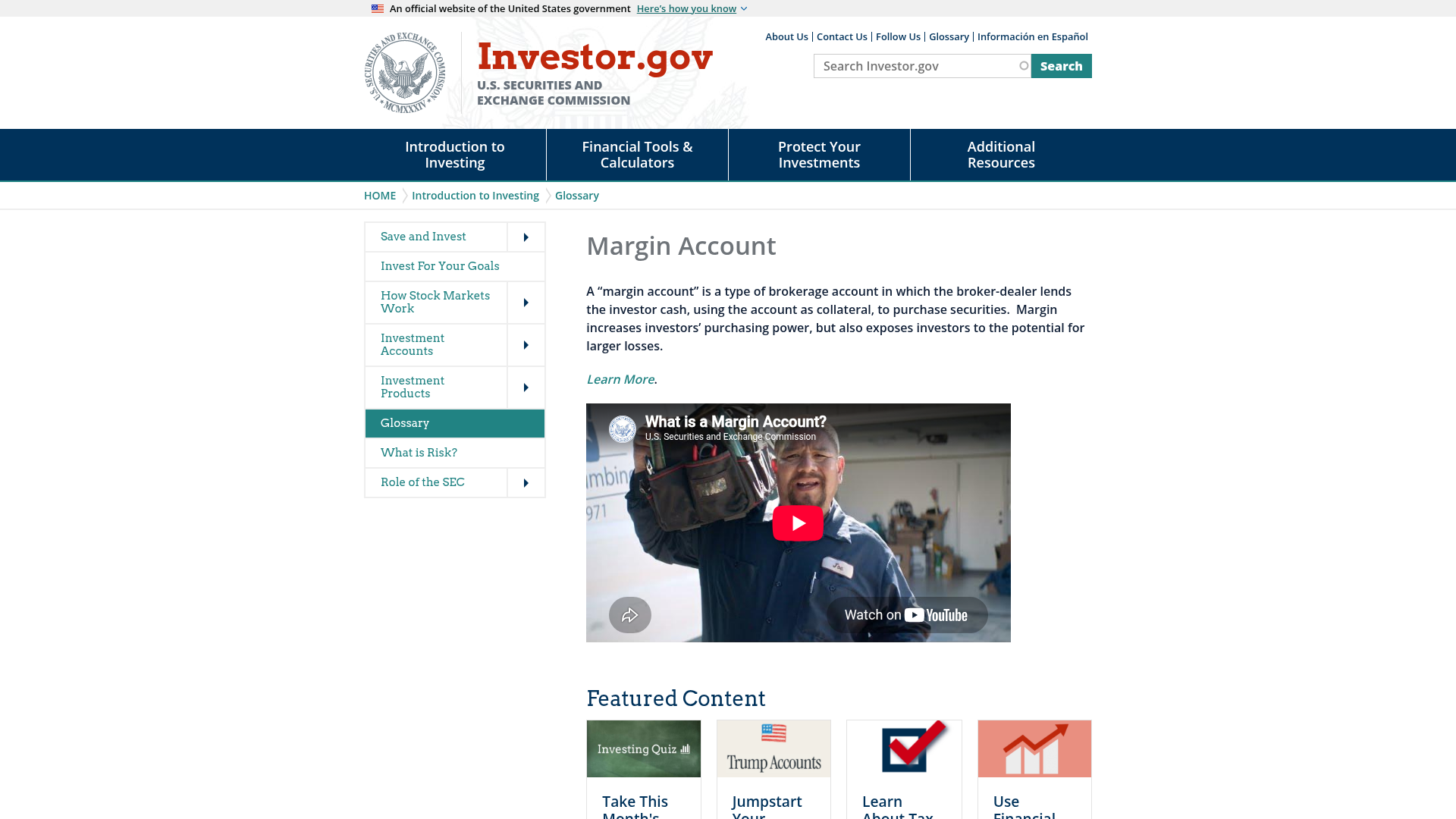
- Investor.gov — Margin: borrowing money to pay for stocksinvestor.gov
- Financial Conduct Authority — Financial Services Registerregister.fca.org.uk
Escrito por Sofia Reyes
Tutor de Riesgo y Psicología. Escribimos formación estructurada y en lenguaje sencillo sobre forex para personas que aprenden desde cero. Primero la comprensión, siempre — y nunca asesoramiento financiero. El curso en sí reside en el plan de estudios.
Sigue aprendiendo
A dónde lleva esta guía después
Las guías relacionadas, en el orden en que se construyen a partir de esta. Cada una es una lectura completa por sí misma, y ninguna asume que ya hayas terminado esta página.
- Las matemáticas implacables: por qué una pérdida del 50% exige una ganancia del 100% para recuperarsePerder la mitad de su capital de trading no significa que solo necesite una ganancia adicional del 50%; el camino hacia la…
- Desmitificando el trading: lo que sus seres queridos realmente necesitan saber sobre sus actividades en el mercadoExplicar el trading en el mercado a familiares preocupados implica eliminar la jerga y los mitos, centrándose en las mecánicas, los…
- La Cuenta Mínima Viable: cuando el dimensionamiento de posición sensato alcanza su límiteMuchos aspirantes a traders subestiman el capital necesario para aplicar consistentemente una gestión de riesgo sólida, a menudo…
- Aritmética del Riesgo-Recompensa: la tasa de aciertos que cada ratio exige silenciosamenteDescubra el vínculo inseparable entre su ratio riesgo-recompensa y su tasa de aciertos, y aprenda la aritmética esencial para una…
- El instante después de hacer clic: el viaje de su operación por dentroEsa fracción de segundo entre pulsar 'comprar' y ver su posición abrirse es una avalancha de procesos complejos. Comprenda lo que…