Panduan · 11 menit baca · 2,949 words
Menguasai Akun $500 Anda: Panduan Terperinci Penentuan Ukuran Posisi
Temukan langkah-langkah penting untuk menghitung ukuran posisi yang tepat untuk akun trading $500, melindungi modal Anda, dan mendorong pertumbuhan yang konsisten.

Poin-poin penting
- Position sizing adalah alat manajemen risiko paling krusial untuk akun kecil, yang secara langsung mencegah kerugian katastropik.
- Selalu tentukan risiko per trade Anda sebagai persentase dari saldo akun Anda (misalnya, 1-2%) sebelum memasuki posisi apa pun.
- Stop loss yang ditempatkan dengan baik tidak bisa ditawar; itu menentukan jumlah maksimum yang bersedia Anda rugi dalam satu trade.
- Memahami nilai pip untuk pasangan mata uang pilihan Anda dan mata uang akun adalah fundamental untuk perhitungan ukuran lot yang akurat.
- Leverage memperbesar keuntungan dan kerugian; penerapan konservatif sangat penting, terutama dengan modal terbatas.
- Broker sering memiliki ukuran trade minimum (misalnya, 0.01 lot) yang dapat memengaruhi kemampuan Anda untuk trading posisi yang sangat kecil secara akurat.
Tantangan $500: Mengapa Setiap Dolar Berharga
Bayangkan Anda mulai trading dengan akun $500. Mungkin jumlah ini tidak terdengar banyak dalam skema besar pasar keuangan, di mana pemain institusional menggerakkan miliaran, tetapi bagi Anda, ini adalah jumlah yang signifikan, mewakili modal hasil kerja keras Anda dan aspirasi Anda dalam trading. Banyak trader baru memulai dengan jumlah yang serupa, bahkan mungkin lebih sedikit, dan mereka sering melakukan kesalahan yang sama: mereka memperlakukannya seperti tiket lotre, berharap mendapatkan kemenangan besar yang cepat. Bukan ini cara kerja trading yang konsisten. Sebaliknya, akun kecil menuntut disiplin dan presisi yang lebih besar dalam mengelola risiko Anda.
Tujuan utama Anda dengan akun $500 bukanlah untuk menjadi kaya dalam semalam. Ini adalah untuk bertahan, belajar, dan menumbuhkan modal Anda secara bertahap. Untuk melakukan ini, setiap trade yang Anda lakukan perlu dipertimbangkan dengan cermat. Anda tidak bisa menanggung drawdown besar atau keputusan impulsif. Di sinilah position sizing, sebuah konsep yang sering diabaikan atau disalahpahami, menjadi sekutu terkuat Anda. Ini adalah kerangka kerja yang melindungi modal awal Anda dan memungkinkan Anda untuk tetap berada dalam permainan cukup lama untuk mengembangkan keterampilan Anda.
Tanpa strategi position sizing yang jelas, Anda pada dasarnya berjudi. Satu trade yang buruk, dan sebagian besar akun Anda bisa lenyap. Dua atau tiga, dan Anda mungkin sepenuhnya bangkrut. Artikel ini akan memandu Anda, langkah demi langkah, tentang cara menghitung dengan tepat berapa banyak yang harus dipertaruhkan pada setiap trade dengan akun $500, memastikan Anda mempertahankan modal Anda untuk jangka panjang. Kami akan menguraikan aritmatika dan pertimbangan praktis agar Anda dapat mendekati pasar dengan keyakinan, bukan hanya harapan.
Apa Arti Position Sizing untuk Trading Anda
Position sizing hanyalah proses memutuskan berapa banyak unit pasangan mata uang, saham, atau kontrak yang akan Anda perdagangkan untuk setup tertentu. Ini bukan tentang berapa banyak uang yang Anda inginkan untuk dihasilkan; ini tentang berapa banyak uang yang Anda mampu rugi dalam satu trade. Perbedaan ini sangat fundamental. Kebanyakan pemula fokus pada potensi keuntungan, yang membuat mereka mengambil posisi yang terlalu besar relatif terhadap modal mereka. Seorang trader berpengalaman, bagaimanapun, pertama-tama menentukan kerugian yang dapat mereka terima.
Bayangkan seperti mengemudi mobil. Anda tidak hanya menginjak gas dan berharap yang terbaik. Anda menyesuaikan kecepatan Anda berdasarkan kondisi jalan, lalu lintas, dan tingkat keterampilan Anda. Position sizing adalah batas kecepatan finansial Anda. Ini mencegah Anda mengambil tikungan terlalu cepat dan menghancurkan seluruh akun Anda. Ini adalah inti dari manajemen uang yang bertanggung jawab dalam trading, memastikan bahwa tidak ada satu trade pun, tidak peduli seberapa menggoda, yang dapat menghancurkan modal Anda.
Keindahan dari position sizing yang tepat adalah bahwa ia menstandardisasi risiko Anda. Baik akun Anda $500 atau $500,000, Anda menentukan persentase modal yang konsisten yang bersedia Anda pertaruhkan. Ini memungkinkan akun Anda tumbuh secara eksponensial saat Anda benar, sementara hanya menyusut secara bertahap saat Anda salah. Ini adalah tulang punggung matematis dari profitabilitas yang konsisten dan ketahanan dalam menghadapi kerugian yang tak terhindarkan. Ini adalah bagian yang dilewati sebagian besar panduan, seringkali langsung beralih ke indikator kompleks tanpa meletakkan batu fondasi ini.
Mendefinisikan Risiko Anda: Metode Persentase Akun
Langkah pertama, dan bisa dibilang yang paling penting, dalam position sizing adalah memutuskan berapa persentase dari total modal trading Anda yang bersedia Anda pertaruhkan dalam satu trade. Persentase ini harus kecil, terutama untuk trader baru. Rekomendasi umum adalah antara 1% dan 2% dari akun Anda. Untuk akun $500, mari kita gunakan 1% sebagai titik awal yang konservatif.
Jadi, jika saldo akun Anda adalah $500, dan Anda memutuskan untuk merisikokan 1% per trade, kerugian maksimum yang dapat Anda terima untuk trade tersebut adalah $500 * 0.01 = $5. $5 ini adalah jumlah maksimum mutlak yang siap Anda rugi jika trade berlawanan arah dengan Anda dan mengenai stop loss Anda. Mungkin terlihat seperti jumlah yang sangat kecil, tetapi ingat, tujuannya adalah bertahan dan konsistensi. Kehilangan $5 dalam satu trade dapat dikelola; kehilangan $50 atau $100 pada akun $500 adalah jalur cepat untuk tersingkir.
Mengapa tidak 5% atau 10%? Bayangkan kehilangan 10% hanya dalam dua trade berturut-turut. Akun $500 Anda akan turun menjadi $405 ($500 - $50 - $45). Sekarang Anda perlu menghasilkan lebih dari 23% hanya untuk kembali ke titik awal Anda. Dengan risiko 1%, dua kerugian berturut-turut ($5 + $4.95 = $9.95) meninggalkan Anda dengan $490.05, posisi yang jauh lebih mudah dipulihkan secara psikologis dan finansial. Matematika kerugian majemuk bekerja sangat cepat melawan Anda dengan persentase risiko yang lebih tinggi.
Sabuk Pengaman Trading Anda: Menetapkan Stop Loss
Setelah Anda menentukan risiko dolar per perdagangan Anda, bagian selanjutnya dari teka-teki ini adalah stop loss Anda. Stop loss adalah perintah yang Anda tempatkan kepada broker Anda untuk secara otomatis menutup perdagangan Anda jika harga bergerak berlawanan dengan Anda sebesar jumlah yang telah ditentukan sebelumnya. Ini adalah perlindungan utama Anda, memastikan bahwa kerugian Anda tidak melebihi jumlah risiko yang telah Anda tetapkan ($5 dalam contoh akun $500 kita).
Stop loss Anda tidak boleh berupa angka acak. Stop loss harus didasarkan pada analisis perdagangan Anda – di mana, secara teknis, ide perdagangan Anda akan menjadi tidak valid. Misalnya, jika Anda membeli EUR/USD, stop loss Anda mungkin ditempatkan tepat di bawah swing low terbaru atau level support kunci. Ini memberikan titik logis di mana Anda mengakui bahwa ide perdagangan Anda salah. Untuk contoh kita, mari kita asumsikan, setelah analisis Anda, Anda menentukan stop loss logis untuk perdagangan beli EUR/USD Anda adalah 20 pips.
Yang penting, jarak stop loss (dalam pips) secara langsung memengaruhi ukuran posisi Anda. Stop loss yang lebih lebar (lebih banyak pips) berarti Anda memerlukan ukuran posisi yang lebih kecil untuk menjaga risiko dolar Anda tetap konstan. Stop loss yang lebih ketat (lebih sedikit pips) memungkinkan ukuran posisi yang lebih besar. Hubungan terbalik ini adalah kunci untuk memahami mekanisme penentuan ukuran posisi. Anda pertama-tama menentukan kerugian dolar maksimum Anda, lalu stop loss teknis Anda, dan kedua angka ini akan menentukan ukuran perdagangan Anda.
Memahami Nilai Pip dalam Akun Standar
Sebelum kita dapat menghitung ukuran lot kita, kita perlu mengetahui nilai satu pip untuk pasangan mata uang yang kita perdagangkan, dalam mata uang dasar akun kita (USD, dalam contoh ini). Ini bisa sedikit membingungkan pada awalnya, karena nilai pip berubah tergantung pada pasangan mata uang dan mata uang akun Anda. Untuk sebagian besar pasangan mata uang utama di mana USD adalah quote currency (mata uang kedua dalam pasangan, seperti EUR/USD atau GBP/USD), satu pip untuk standard lot (100.000 unit) biasanya adalah $10.
Namun, kita berurusan dengan akun $500 dan kemungkinan besar akan memperdagangkan micro-lot atau bahkan fraksi yang lebih kecil. Sebuah micro lot adalah 1.000 unit mata uang dasar, dan nilai pip-nya untuk pasangan yang dikutip dalam USD seperti EUR/USD adalah $0.10. Sebuah mini lot (10.000 unit) memiliki nilai pip $1.00. Ini adalah perbedaan penting, karena sebagian besar broker akan memungkinkan Anda untuk berdagang dalam micro-lot.
Untuk pasangan mata uang di mana USD adalah base currency (mata uang pertama, seperti USD/JPY atau USD/CHF), atau pasangan eksotis, perhitungannya sedikit berbeda. Nilai pip ditetapkan dalam quote currency, dan kemudian dikonversi ke mata uang dasar akun Anda. Misalnya, jika Anda memperdagangkan USD/JPY dan kuotasinya adalah 110.00, satu pip untuk standard lot adalah 1.000 JPY. Untuk menemukan nilai USD-nya, Anda akan membagi 1.000 JPY dengan nilai tukar USD/JPY (1000 / 110.00 ≈ $9.09). Sebagian besar platform perdagangan akan menampilkan nilai pip untuk Anda, tetapi memahami mekanismenya sangat penting untuk membangun kepercayaan diri. Mari kita asumsikan untuk contoh EUR/USD kita, kita menargetkan nilai pip $0.10 per micro-lot.
Nilai Pip Perkiraan untuk Pasangan Forex Umum (Akun USD)
| Pasangan Mata Uang | Nilai Pip Standard Lot (USD) | Nilai Pip Mini Lot (USD) | Nilai Pip Micro Lot (USD) |
|---|---|---|---|
| EUR/USD | $10.00 | $1.00 | $0.10 |
| GBP/USD | $10.00 | $1.00 | $0.10 |
| USD/JPY | Sekitar $9.09 | Sekitar $0.91 | Sekitar $0.09 |
| AUD/USD | $10.00 | $1.00 | $0.10 |
| USD/CAD | Sekitar $7.70 | Sekitar $0.77 | Sekitar $0.077 |
Tujuan utama Anda dengan akun $500 bukanlah untuk menjadi kaya dalam semalam; melainkan untuk bertahan, belajar, dan menumbuhkan modal Anda secara bertahap melalui manajemen risiko yang cermat.
Menghitung Ukuran Lot Anda: Persamaan Inti
Sekarang kita memiliki semua informasi untuk menghitung ukuran lot yang tepat. Mari kita ulas kembali contoh kita: akun sebesar $500, risiko 1% per perdagangan ($5), dan stop loss 20 pip pada EUR/USD. Kita juga tahu bahwa untuk EUR/USD, satu micro lot (0.01 lot standar) memiliki nilai pip $0.10.
Rumus untuk menghitung ukuran posisi (position size) cukup sederhana:
Ukuran Posisi (dalam unit) = (Risiko Akun dalam Dolar / Stop Loss dalam Pip) / Nilai Pip Per Unit
Mari kita masukkan angka-angka kita:
- Risiko Akun dalam Dolar = $5
- Stop Loss dalam Pip = 20 pip
- Nilai Pip Per Unit (micro lot) = $0.10
Pertama, hitung nilai dolar per pip yang sesuai dengan risiko dan stop loss Anda: $5 / 20 pip = $0.25 per pip. Ini berarti Anda mampu mengambil posisi di mana setiap pergerakan pip akan merugikan Anda $0.25.
Selanjutnya, bagi angka ini dengan nilai pip dari satu unit (micro lot) untuk mengetahui berapa banyak micro lot yang bisa Anda perdagangkan: $0.25 / $0.10 (per micro lot) = 2.5 micro lot. Karena beberapa broker hanya memungkinkan perdagangan dalam micro lot utuh atau setengah, Anda akan membulatkan ke bawah menjadi 2 micro lot, atau 0.02 lot standar. Banyak broker mengizinkan perdagangan dalam kelipatan 0.01 lot, sehingga 0.02 adalah ukuran yang sangat praktis.
Ini berarti untuk akun $500 Anda, dengan risiko 1% dan stop loss 20 pip pada EUR/USD, Anda akan membuka perdagangan sebesar 0.02 lot standar. Setiap pergerakan pip kemudian akan bernilai $0.20 (0.02 lot * nilai lot standar $10/pip = $0.20/pip), dan jika stop loss Anda tersentuh, kerugian Anda akan menjadi $0.20/pip * 20 pip = $4.00, yang masih dalam batas risiko $5 Anda. Proses ini, yang diulang untuk setiap perdagangan, memastikan manajemen risiko yang konsisten.
Leverage dan Margin: Dua Sisi Mata Uang yang Sama
Leverage sering disalahpahami dan ditakuti, namun sebenarnya itu hanyalah kemampuan untuk mengendalikan sejumlah besar modal dengan jumlah uang Anda sendiri yang relatif kecil. Misalnya, leverage 1:500 berarti Anda dapat mengendalikan mata uang senilai $500.000 hanya dengan $1.000 dari modal Anda sebagai margin. Meskipun dapat memperbesar keuntungan, leverage juga secara dramatis memperbesar kerugian jika tidak dikelola dengan hati-hati. Broker terkemuka seperti OANDA dan FOREX.com menawarkan berbagai tingkat leverage, yang seringkali dibatasi untuk klien ritel berdasarkan badan regulasi.
Margin adalah uang aktual yang disisihkan dari akun Anda untuk membuka dan mempertahankan posisi yang dileverage. Ini bukan biaya; ini adalah deposit. Semakin tinggi leverage, semakin sedikit margin yang diperlukan untuk membuka posisi. Di bawah peraturan ESMA, misalnya, pasangan mata uang utama dibatasi pada leverage 1:30 untuk klien ritel, yang membutuhkan margin 3.33%. Di wilayah lain, seperti pada broker yang diatur oleh ASIC, rasio leverage yang lebih tinggi masih umum untuk beberapa klien ritel.
Untuk perdagangan EUR/USD 0.02 lot kita, mari kita hitung margin yang dibutuhkan. Satu micro lot (0.01 lot standar) adalah 1.000 unit. Jadi, 0.02 lot adalah 2.000 unit EUR. Jika EUR/USD diperdagangkan pada 1.0800, maka 2.000 EUR bernilai $2.160. Jika broker Anda menawarkan leverage 1:500 (umum pada broker offshore atau di luar zona regulasi ketat), margin yang dibutuhkan adalah $2.160 / 500 = $4.32. Jika broker Anda menawarkan leverage 1:30 (umum untuk perusahaan yang diatur oleh FCA seperti FxPro), margin yang dibutuhkan adalah $2.160 / 30 = $72.00. Ini adalah perbedaan yang signifikan dan secara langsung memengaruhi berapa banyak free margin yang tersisa di akun Anda untuk perdagangan lain atau untuk menahan drawdown. Selalu ketahui batas leverage dan persyaratan margin broker Anda. Anda dapat memeriksa batas regulasi spesifik, misalnya, di situs web FCA mengenai produk Contract for Difference: https://www.fca.org.uk/firms/contract-difference-products.
Persyaratan Margin untuk Posisi $2.160 pada Tingkat Leverage yang Berbeda
| Rasio Leverage | Persyaratan Margin (sebagai % dari Nilai Posisi) | Margin untuk Posisi $2.160 (0.02 EUR/USD) |
|---|---|---|
| 1:30 | 3.33% | $72.00 |
| 1:50 | 2.00% | $43.20 |
| 1:100 | 1.00% | $21.60 |
| 1:200 | 0.50% | $10.80 |
| 1:500 | 0.20% | $4.32 |
Menerapkan Semuanya: Contoh Lengkap
Mari kita gabungkan semuanya ke dalam satu contoh untuk akun $500 kita. Kita akan menggunakan pengaturan trade hipotetis untuk GBP/JPY, pasangan yang lebih volatil untuk menggambarkan dampak nilai pip yang berbeda.
Skenario: Anda melihat peluang shorting pada GBP/JPY. Analisis teknikal Anda menunjukkan entri di 182.500 dan stop loss di 182.750. Harga pasar saat ini untuk USD/JPY adalah 147.000.
Langkah 1: Tentukan Risiko Anda. Saldo akun Anda adalah $500. Kali ini Anda memutuskan untuk mengambil risiko 1.5% per trade. Risiko dolar maksimum = $500 * 0.015 = $7.50.
Langkah 2: Tentukan Stop Loss Anda dalam Pip. Harga entri: 182.500 Harga stop loss: 182.750 Jarak stop loss = 182.750 - 182.500 = 0.250. Karena GBP/JPY bergerak dalam kelipatan 0.001, ini adalah 25 pip.
Langkah 3: Hitung Nilai Pip untuk GBP/JPY dalam USD. GBP/JPY tidak dikutip dalam USD. Satu pip untuk lot standar (100.000 unit) GBP/JPY adalah 1.000 JPY. Untuk mengubahnya ke USD, kita bagi dengan nilai tukar USD/JPY saat ini. Nilai pip dalam USD = (100.000 unit * 0.001 pergerakan pip) / nilai tukar USD/JPY = 100 JPY / 147.000 = sekitar $0.68 per pip lot standar. Namun, kita sedang mempertimbangkan micro-lot. Jadi, untuk micro lot (1.000 unit), nilai pip adalah sekitar $0.0068. Koreksi: Perhitungan nilai pip untuk USD/JPY di atas adalah $9.09 per lot standar, yang berarti micro lot adalah $0.09. Mari kita hitung ulang secara akurat untuk GBP/JPY. Lot standar GBP/JPY (100.000 unit) dengan pergerakan pip 0.01 (lima angka di belakang koma) akan menjadi 1.000 JPY. Jika broker Anda mengutip dengan 2 angka di belakang koma untuk pasangan JPY (misalnya 147.00), maka perubahan 0.01 adalah 1 pip. Jadi 1 pip pada 100.000 unit adalah 1.000 JPY. 1.000 JPY ini kira-kira 1000/147.00 = $6.80 untuk lot standar. Oleh karena itu, untuk micro lot (0.01 lot standar), satu pip adalah sekitar $0.068 (USD). Mari kita gunakan $0.068 per pip micro lot untuk GBP/JPY.
Langkah 4: Hitung Ukuran Lot Anda. Risiko dolar maksimum = $7.50 Stop loss dalam pip = 25 pip Nilai pip per micro lot = $0.068
Nilai dolar per pip yang mampu Anda tanggung = $7.50 / 25 pip = $0.30 per pip. Jumlah micro lot = $0.30 / $0.068 per micro lot = 4.41 micro lot.
Karena kita hanya bisa melakukan trade dalam micro lot utuh (atau seringkali kelipatan 0.01), kita bulatkan ke bawah menjadi 4 micro lot, atau 0.04 lot standar. Ini berarti jika Anda melakukan trade 0.04 lot, risiko Anda akan menjadi 0.04 lot * $6.80/ pip lot standar * 25 pip = $6.80, yang masih dalam batas $7.50 Anda.
Pendekatan metodis ini memastikan bahwa bahkan dengan akun $500, Anda membuat keputusan yang terinformasi dan terkontrol risiko pada setiap trade, memaksimalkan keberlangsungan Anda di pasar.
Kekuatan Kemenangan Kecil dan Compounding
Mudah sekali untuk melihat keuntungan $5 pada akun $500 dan merasa kecil hati, berpikir bahwa itu tidak sepadan dengan usaha. Di sinilah banyak trader baru tersandung, mengejar posisi yang lebih besar dan risiko yang lebih tinggi demi keuntungan dolar yang lebih besar. Namun, kekuatan sejati trading, terutama dengan akun kecil, terletak pada konsistensi dan keajaiban compounding. Keuntungan 1% pada $500 adalah $5. Keuntungan 1% pada $505 (setelah kemenangan pertama itu) adalah $5.05. Mungkin terlihat tidak signifikan, tetapi seiring waktu, keuntungan kecil yang konsisten ini dapat terakumulasi secara luar biasa.
Bayangkan Anda hanya menghasilkan keuntungan rata-rata 1% per minggu, secara konsisten, sambil menjaga kerugian Anda terbatas pada 1-2%. Dalam setahun, akun $500 itu bisa menjadi jauh lebih besar, bukan melalui satu atau dua pukulan besar, tetapi melalui ratusan trade kecil yang dikelola dengan cermat. Fokus pada persentase keuntungan yang konsisten ini, daripada jumlah dolar yang besar, adalah pola pikir yang memisahkan trader sukses dari mereka yang dengan cepat menghabiskan akun mereka. Jangan meremehkan efek bola salju dari pertumbuhan kecil yang terkontrol.
Pendekatan ini juga membangun kepercayaan diri. Setiap trade kecil yang menang memperkuat kebiasaan baik dan memperkuat keyakinan Anda pada strategi Anda. Mengambil risiko yang terlalu besar untuk kemenangan yang berpotensi lebih besar, tetapi kurang mungkin, seringkali mengarah pada frustrasi dan keraguan diri. Patuhi rencana, lindungi modal Anda, dan biarkan compounding bekerja selama berbulan-bulan dan bertahun-tahun.
Pertimbangan Broker di Dunia Nyata untuk Akun Kecil
Saat Anda trading dengan akun $500, pilihan broker Anda menjadi sangat penting. Tidak semua broker diciptakan sama, dan penawaran mereka dapat secara signifikan memengaruhi kemampuan Anda untuk menerapkan ukuran posisi yang tepat. Misalnya, Anda membutuhkan broker yang menawarkan micro-lot (0.01 lot standar) atau bahkan nano-lot (0.001 lot standar, meskipun ini kurang umum) untuk mengeksekusi ukuran posisi kecil yang telah kita hitung. Broker seperti Pepperstone, IC Markets, dan XM umumnya dikenal karena spread kompetitif mereka dan kemampuan untuk trade lot pecahan, menjadikannya cocok untuk ukuran akun kecil.
Poin praktis lainnya adalah deposit minimum. Meskipun banyak broker mungkin mengiklankan deposit minimum yang rendah, kadang-kadang bahkan $0 untuk beberapa jenis akun, ini tentang apakah minimum tersebut memungkinkan trading yang efektif. Deposit $50, misalnya, secara teknis mungkin dengan beberapa broker, tetapi itu membuat manajemen risiko yang tepat hampir tidak mungkin mengingat ukuran trade minimum yang umum. Modal awal $500 memberikan dasar yang jauh lebih realistis untuk menerapkan prinsip-prinsip ukuran posisi yang telah kita diskusikan.
Selalu periksa status regulasi broker. Misalnya, jika Anda berada di Eropa, broker yang diatur oleh FCA atau CySEC seperti FxPro atau Exness akan membatasi leverage Anda, yang, meskipun membatasi potensi keuntungan, juga berfungsi sebagai kontrol risiko bawaan. Jika Anda berada di Australia, broker yang diatur oleh ASIC seperti AvaTrade atau Plus500 menawarkan kondisi yang kompetitif. Pahami bahwa broker yang tidak teregulasi atau teregulasi dengan buruk mungkin menawarkan leverage yang sangat tinggi dan menarik, tetapi ini datang dengan risiko counterparty yang signifikan dan perlindungan yang lebih sedikit untuk modal Anda. Selalu prioritaskan keamanan dan regulasi saat memilih tempat menempatkan dana Anda. Anda dapat memeriksa status regulasi broker pada daftar resmi, seperti Financial Services Register dari Financial Conduct Authority: https://register.fca.org.uk/.
Di Balik Angka: Pola Pikir Trader yang Bijaksana
Meskipun matematika penentuan ukuran posisi sudah jelas, trading yang sukses membutuhkan lebih dari sekadar menghitung angka. Ini menuntut pola pikir tertentu – yaitu kesabaran, disiplin, dan kontrol emosi. Godaan untuk menyimpang dari ukuran posisi yang telah Anda hitung, untuk 'hanya mengambil risiko sedikit lebih banyak' pada trade yang Anda rasa sangat yakin, sangat kuat. Tahanlah. Keputusan emosional ini adalah cara tercepat untuk merusak semua manajemen risiko Anda yang cermat.
Mengembangkan pola pikir yang disiplin ini membutuhkan waktu dan latihan. Ini melibatkan penerimaan bahwa kerugian adalah bagian tak terhindarkan dari trading, dan bahwa tujuan Anda bukanlah untuk menghindarinya sepenuhnya, tetapi untuk mengelola dampaknya. Setiap kali Anda mematuhi aturan penentuan ukuran posisi Anda, terutama setelah trade yang merugi, Anda memperkuat kebiasaan positif. Setiap kali Anda melanggar aturan tersebut, Anda melemahkan disiplin Anda dan mengundang risiko yang lebih besar.
Ingat, akun $500 Anda adalah tempat latihan. Di sinilah Anda mengasah keterampilan, menguji strategi, dan membangun kepercayaan diri yang diperlukan untuk modal yang lebih besar. Perlakukan dengan hormat, terapkan prinsip-prinsip manajemen risiko yang baik secara cermat. Pendekatan metodis ini, alih-alih ambisi yang sembrono, adalah yang benar-benar menempatkan Anda untuk kesuksesan jangka panjang di dunia trading yang dinamis. Jaga risiko Anda tetap kecil, disiplin Anda kuat, dan saksikan akun Anda tumbuh seiring waktu.
Baca sumber utama
Periksa di regulator, bukan pada kami
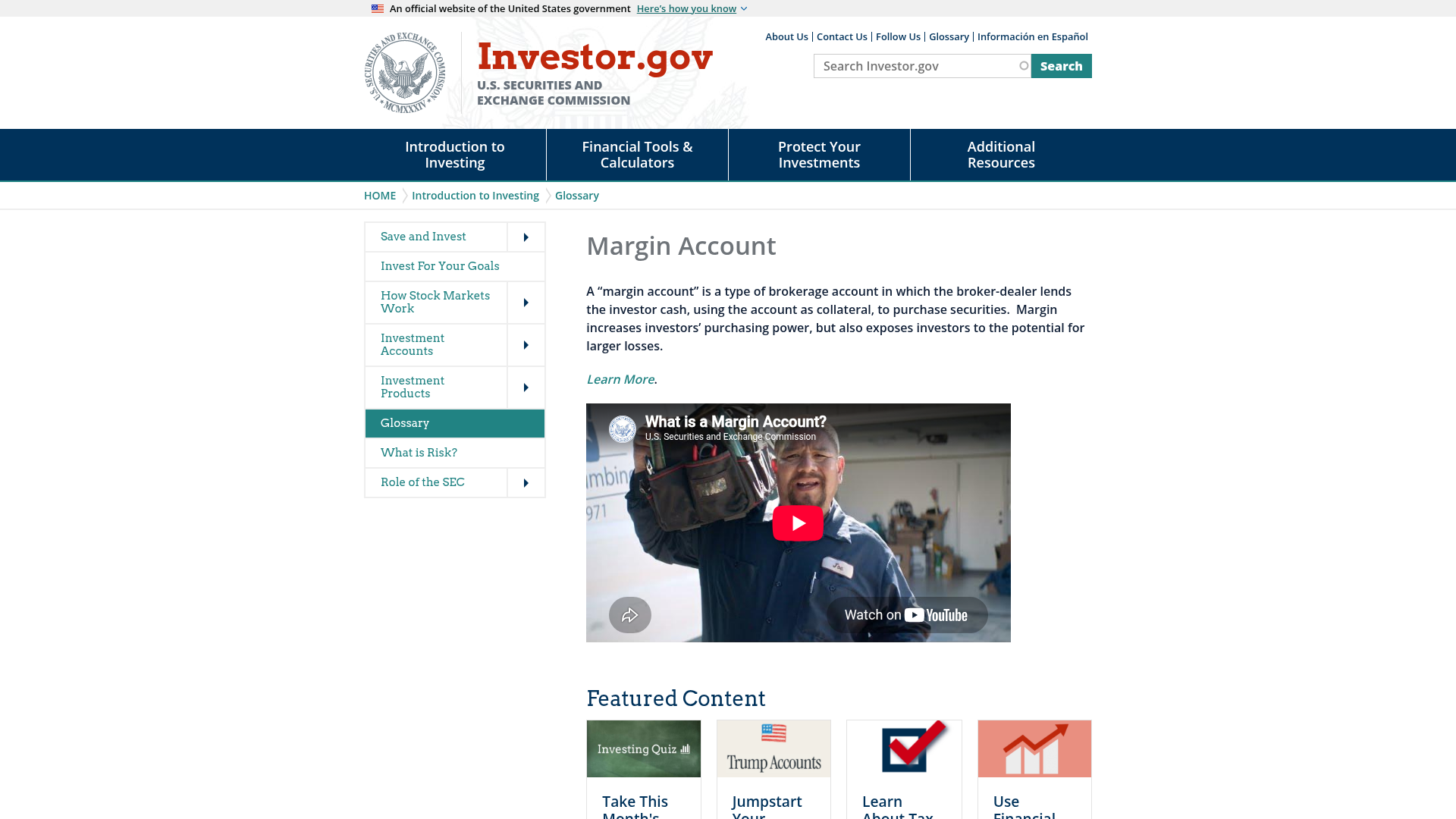
Tangkapan layar halaman resmi di balik aturan dalam panduan ini. Buka sendiri — kata-kata regulator sendiri selalu lebih baik daripada ringkasannya.
Sering ditanyakan
Sumber
Dari mana ini berasal
- ESMA — CFD leverage limits for retail clientsesma.europa.eu
- FCA — Contract for difference productsfca.org.uk
- Investor.gov — Margin: borrowing money to pay for stocksinvestor.gov
- FCA — Financial Services Registerregister.fca.org.uk
- ASIC — Professional registersasic.gov.au
Ditulis oleh Daniel Okafor
Penulis Kurikulum. Kami menulis edukasi forex yang terstruktur, dalam bahasa Inggris sederhana untuk orang yang belajar dari awal. Pemahaman dulu, selalu — dan tidak pernah nasihat keuangan. Kursus itu sendiri ada di kurikulum.
Terus belajar
Ke mana panduan ini mengarah selanjutnya
Panduan yang paling dekat dengan ini, sesuai urutan pembangunannya. Masing-masing adalah bacaan lengkap tersendiri, dan tidak ada yang berasumsi Anda telah menyelesaikan halaman ini.
- *Position sizing* disederhanakan (dengan contoh yang dikerjakan)Pelajari cara menghitung ukuran perdagangan yang tepat untuk akun *forex* Anda guna mengelola risiko secara efektif dan melindungi…
- Dari Demo ke Live: Empat Langkah Bertahap menuju Perdagangan NyataTransisi dari akun demo ke perdagangan uang sungguhan membutuhkan pendekatan terstruktur untuk mengelola risiko dan menguasai…
- Mengapa Pasangan Yen Bergerak dalam Langkah 0.01 dan Bagaimana Hal Itu Membentuk Nilai Pip AndaMemahami kuotasi pasangan yen yang tidak biasa sangat penting untuk manajemen risiko yang tepat dan perhitungan untung/rugi yang…
- Akun Minimum yang Layak: Ketika *Position Sizing* yang Masuk Akal Mencapai BatasnyaBanyak *trader* yang bercita-cita tinggi meremehkan modal yang dibutuhkan untuk secara konsisten menerapkan manajemen risiko yang…
- Menghitung Nilai Pip Secara Manual untuk Setiap Pasangan *Forex*, Langkah demi LangkahPelajari perhitungan manual penting untuk nilai *pip* di semua pasangan *forex* mayor dan minor, memastikan Anda memahami risiko…